Small Apartment Vinyl Setup Ideas: How to Create a Beautiful Listening Space Without Taking Over Your Home
Introduction
There is something special about listening to a record in a small apartment.
The soft crackle before the music begins. The ritual of choosing an album after a long day. The feeling of creating a little space in your home where you can slow down and enjoy the music.
For many people, that is what makes vinyl so rewarding.
But if you live in an apartment, setting up a record player can feel like a challenge. Your living room may already be crowded, a full-size stereo system may not fit your layout, and the last thing you want is for your listening space to feel cluttered.
The good news? You do not need a dedicated music room or a large sound system to enjoy vinyl at home.
With thoughtful turntable placement, space-saving furniture, and the right speaker setup, even a compact room can become a comfortable and stylish place to listen. The key is finding the right balance between space efficiency, sound quality, and modern design.
In this guide, we will explore practical small apartment vinyl setup ideas, including where to place your turntable, how to arrange speakers, how to store your records, and how to choose a setup that fits your space and listening habits.
Whether you are choosing your first turntable or refreshing an existing vinyl system, you can create a listening space that feels intentional, sounds enjoyable, and belongs naturally in your home.
1. Start With the Right Mindset: A Vinyl Setup Does Not Need a Dedicated Room
Small Spaces Can Still Make Room for Great Listening
You do not need a dedicated listening room to enjoy vinyl at home. While a traditional hi-fi setup might include large floor-standing speakers, separate components, and extensive record storage, a smaller system can be just as rewarding when it suits your space and listening habits.
In a small apartment, thoughtful choices make all the difference:
-
Keep your collection intentional. Start with the records you love most and expand your collection as your storage allows.
-
Choose furniture that works harder. A sturdy media console can provide a home for your turntable while keeping records and accessories organized.
-
Plan your equipment placement. A stable, level surface and sensible speaker positioning help you build a more practical listening setup.
-
Make the system part of your home. Choose equipment and furniture that complement your interior rather than compete with it.
A compact vinyl corner does not have to feel like a compromise. With the right layout, it can become a natural part of your everyday routine.
Think "Listening Corner," Not "Stereo System"
Instead of trying to recreate a traditional listening room, start by imagining a small corner where music fits naturally into your day.
Depending on your space and preferences, your setup might include:
-
A turntable on a sturdy sideboard or media console
-
A compact shelf or cabinet for vinyl records
-
Built-in speakers or a pair of separate speakers
-
A comfortable seat, if space allows
-
Soft lighting and a few personal touches
You do not need every item on this list. The best setup is the one that balances your available space, listening preferences, and everyday needs.
If simplicity is your priority, a turntable with built-in speakers can reduce the number of separate components you need to accommodate. If you prefer separate speakers, a compact stereo system can offer more flexibility in how you arrange your listening space.
Whichever approach you choose, make sure your turntable has a stable, level surface and that speaker placement does not introduce excessive vibration during playback.
A Practical Example: The Living Room Corner Setup
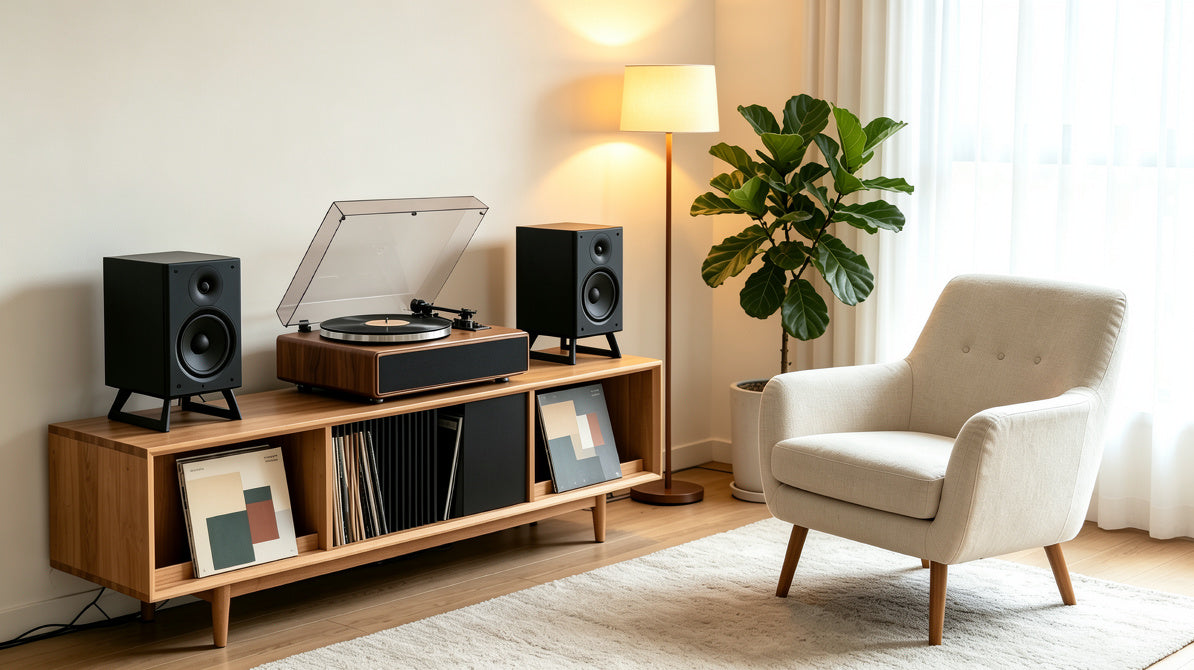
Imagine an apartment with a combined kitchen and living area, limited storage, and modern furniture. Rather than dedicating an entire wall to audio equipment, you could create a compact vinyl corner using a few well-chosen pieces.
Here's one way to approach it:
-
Choose a suitable surface. Use a sturdy sideboard or media console with enough room for your turntable and convenient access to its controls.
-
Plan your record storage. Store your collection vertically in a properly sized shelf or cabinet, with enough support to keep records upright.
-
Select speakers that fit your layout. Compact speakers can work well in smaller rooms, provided you have suitable placement options. An all-in-one system may be a better fit if you want to minimize equipment and cables.
-
Keep cables and accessories organized. Plan for power outlets and audio connections before settling on the final layout.
-
Finish with a few personal details. A plant, artwork, or warm lamp can help the listening corner feel connected to the rest of your home.
The result is a vinyl setup that feels intentional rather than crowded—a space designed around the way you actually live and listen.
Before choosing your equipment, measure the available surface, consider how much record storage you need, and decide whether you prefer the simplicity of built-in speakers or the flexibility of a separate audio system. These decisions will make it easier to create a setup that looks right at home and works for your listening habits.
2. Choosing the Best Location for Your Turntable in a Small Apartment
Where you place your turntable can affect both playback performance and everyday convenience.
It's easy to focus on choosing the right record player and overlook the surface it sits on. But even a well-made turntable can have problems if it's placed on furniture that wobbles, flexes, or transmits too much vibration.
The goal is to find a location that is stable, practical, and easy to incorporate into your living space.
Avoid Unstable Surfaces
Turntables need a stable, level surface to help the stylus track the record groove consistently. In an apartment, everyday movement and speaker vibrations can sometimes interfere with playback.
Be cautious about placing your turntable on:
-
Lightweight folding tables that wobble easily
-
Narrow shelves that provide insufficient support
-
Furniture that shakes when you walk past or operate nearby drawers
-
Surfaces that transmit noticeable vibration from speakers or other equipment
Depending on the setup, excessive vibration may contribute to unwanted noise, skipping, or acoustic feedback. If you notice these issues, check the turntable's leveling, the stability of the furniture, and the position of your speakers before assuming the equipment itself is at fault.
A sturdy, level surface is a simple starting point for a more reliable listening experience.
Best Places to Put a Turntable in a Small Apartment

Option 1: A Media Console or TV Stand
A media console is often one of the easiest places to create a vinyl listening area because it can serve multiple purposes without requiring additional furniture.
Why it works:
-
Fits naturally into an existing living room layout
-
May provide storage for records and accessories
-
Can help keep cables and equipment organized
-
Makes it easy to combine your vinyl setup with your existing entertainment area
What to check before setting up:
-
Surface stability: Make sure the console does not wobble or flex noticeably.
-
Available space: Leave enough room for the turntable, its controls, and any dust cover to open fully.
-
Equipment clearance: Allow sufficient space around amplifiers and other components for ventilation, following the manufacturer's guidance.
-
Speaker placement: Check whether the console gives you enough flexibility to position your speakers without creating excessive vibration.
A media console is especially practical if you want your vinyl setup to feel like a natural part of your living room rather than a separate equipment station.
Option 2: A Bookshelf or Wall-Mounted Shelf
A bookshelf or wall-mounted shelf can be a smart choice when floor space is limited. It can also create a visually clean listening corner without adding another cabinet.
However, not every shelf is suitable for a turntable.
Before using one, make sure it is:
-
Securely installed or properly supported
-
Rated to handle the combined weight of the equipment
-
Deep and wide enough for the turntable to sit safely
-
Stable enough to minimize movement during playback
Avoid narrow decorative shelves or wall-mounted surfaces that flex when touched. For a wall shelf, use mounting hardware appropriate for the wall construction and the expected load.
Also consider how you will access the turntable's controls, change records, and lift the dust cover. A setup that looks neat but is awkward to use may become frustrating over time.
Option 3: Dedicated Vinyl Cart
A compact cart can create a dedicated music station without permanently changing your apartment. This may be especially appealing to renters or anyone who expects to rearrange their furniture.
Potential benefits:
-
Can provide a compact home for records and accessories
-
May be easier to reposition than a large cabinet
-
Can help group your listening equipment in one place
-
Offers a flexible alternative when permanent shelving is not practical
Stability is particularly important here. Choose a cart with a rigid top, adequate load capacity, and wheels that lock securely. Before playing a record, lock the wheels and check that the cart does not rock or sway.
Keep in mind that a cart is not automatically more vibration-resistant than a fixed console. If the floor is uneven or the cart moves easily, a sturdy stationary surface may be the better option.
Expert Tip: Position Your Speakers With Vibration in Mind
Speaker placement matters because sound from your speakers can travel through the air and through the furniture supporting your turntable. At higher listening levels, this can contribute to acoustic feedback, especially when the speakers and turntable share a vibrating surface.
If you use separate speakers, try to:
-
Create some distance. Place the speakers away from the turntable when your room layout allows.
-
Avoid unnecessary contact. Do not place speakers directly on the turntable plinth or on a surface that visibly vibrates during playback.
-
Use stable support. Speaker stands or separate, sturdy surfaces may help reduce vibration transmitted through shared furniture.
-
Adjust the listening angle. Position the speakers toward your usual listening area, following the recommendations for your speaker type and room layout.
In a small apartment, separate speaker stands may not always be practical. If your speakers must share a console with your turntable, experiment with their placement and listen for signs of feedback, especially at higher volumes. Suitable isolation products may help in some setups, but they cannot compensate for every placement problem.
If you use a turntable with built-in speakers, follow the manufacturer's placement guidance rather than applying rules intended for a separate speaker system.
The key takeaway: Choose a stable location first, then arrange your turntable and speakers around the space you have. A thoughtful layout can make your vinyl setup easier to use and help you enjoy your records with fewer placement-related problems.
3. Choose Space-Friendly Vinyl Equipment for Apartment Living
Bigger Equipment Does Not Always Mean Better Sound
When choosing a vinyl setup, it's easy to assume that bigger speakers or more components will automatically deliver a better listening experience. But the best system is not necessarily the largest one—it's the one that suits your room, listening habits, and available space.
In a small apartment, consider equipment that offers:
-
Practical dimensions: Fits your furniture without making the room feel crowded.
-
Straightforward connections: Keeps cables and setup decisions manageable.
-
Balanced sound: Delivers an enjoyable listening experience at the volumes you typically use.
-
Flexible placement: Works with your furniture layout and preferred listening position.
Large speakers can work well in compact rooms, just as smaller speakers can work well in larger ones. What matters is how the system interacts with the room and how much flexibility you have when positioning it.
For apartment living, thoughtful placement and suitable equipment can be more useful than adding components you don't really need.
Turntable Options for Small Spaces
The right setup depends on how involved you want your listening experience to be. Some people value simplicity above all else, while others enjoy choosing separate components and fine-tuning their system.
All-in-One Vinyl Systems
For beginners who want a straightforward way to enjoy records, an all-in-one vinyl system can be an appealing option.
Depending on the model, an integrated system may combine the turntable and speakers in one compact unit, reducing the need for separate equipment and simplifying everyday use.
Potential advantages:
-
Simple setup with fewer separate components
-
A compact footprint for smaller rooms
-
Less equipment to arrange and connect
-
A convenient starting point for new vinyl listeners
This approach may suit first-time record owners, bedrooms, home offices, and apartments where keeping the setup simple is a priority.
The main consideration is flexibility. An integrated system may offer fewer options for changing speakers or upgrading individual components than a system built from separate pieces. Features and upgrade options vary by model, so check the specifications before buying.
For listeners who want the experience of vinyl without building a complicated audio system, AUDURA's compact vinyl offerings may be worth considering. Choose a model based on its actual features, dimensions, connectivity, and the way you prefer to listen.
Separate Components
If you enjoy customizing your audio system, a setup built from separate components may be a better fit.
A typical system can include:
-
A turntable
-
An amplifier or receiver, depending on the system
-
A pair of passive speakers
Some configurations also require a phono preamp. Whether you need one depends on the turntable, amplifier, and other components you choose.
Potential advantages:
-
More freedom to select individual components
-
Greater flexibility when upgrading your system
-
More options for tailoring the sound and speaker placement
However, a separate-component setup can require more furniture space, cables, connections, and setup decisions. It may also cost more once you account for all the components needed to make the system work.
For apartment dwellers, this approach makes sense if you enjoy experimenting with equipment and have enough room to accommodate it comfortably.
Powered Speakers: A Space-Saving Option
Powered speakers have built-in power amplifiers, so they do not require a separate power amplifier in the same way passive speakers do. This can reduce the number of components in your setup.
They can be a practical choice when you want the flexibility of separate speakers without assembling a large stereo system.
Why consider powered speakers?
-
Fewer separate components than many passive-speaker setups
-
Flexible placement on suitable furniture or speaker stands
-
A clean, streamlined appearance
-
Options for pairing with different audio sources, depending on connectivity
Before connecting powered speakers to a turntable, check whether the turntable has a built-in phono preamp or whether an external one is needed. Make sure the speakers support the required input connection as well.
If you want separate speakers but prefer to keep your system simple, powered speakers can offer a useful middle ground between an integrated vinyl system and a more traditional component setup.
Set Realistic Sound Goals for Apartment Living
In a small apartment, the goal is not necessarily to achieve the highest possible volume. It's to enjoy your records with clear vocals, well-balanced instruments, and bass that suits both your room and your neighbors.
Start with a few practical priorities:
-
Clear, natural vocals: Voices should sound easy to follow at your usual listening volume.
-
Balanced midrange and treble: Instruments should sound distinct without becoming harsh or tiring.
-
Controlled bass: Low frequencies should feel satisfying without overwhelming the room or disturbing neighboring apartments.
-
Comfortable listening levels: Your system should sound enjoyable without needing to be played loudly.
Room layout, speaker placement, recording quality, and equipment all influence the final result. A compact system that is well suited to your space can be more satisfying in daily use than a more elaborate system that is difficult to position properly.
Ultimately, the best apartment vinyl setup is the one that fits your room, your budget, and the way you enjoy music. Choose the level of complexity you actually want—and leave enough space to enjoy the records themselves.
4. Design Your Vinyl Setup Around Your Apartment’s Interior Style
A great small apartment vinyl setup should feel like it belongs in your home—not like a piece of equipment that was added as an afterthought.
The best listening spaces balance music, furniture, and personal style. A turntable can be a functional audio component and a design feature, especially when its placement, surrounding furniture, and accessories work together.
You don't need to redesign your entire apartment. A few thoughtful choices can help your vinyl setup feel intentional, inviting, and easy to live with.
Minimalist Vinyl Setup Ideas
Minimalist interiors are a natural fit for a compact vinyl setup. Both are built around intentional choices, functional design, and an appreciation for the things you use and enjoy.
To create a minimalist listening corner, start with a few well-chosen essentials:
-
A simple media console: Choose clean lines and a finish that complements your existing furniture.
-
A streamlined audio setup: Select equipment that suits your listening needs without adding unnecessary components.
-
Organized record storage: Keep your collection accessible without allowing it to overwhelm the room.
-
Subtle lighting: Use a table lamp or indirect lighting to make the area feel inviting.
-
A few personal details: Let one piece of artwork or a favorite album cover provide a focal point.
The key is to reduce visual clutter without making the space feel impersonal.
Rather than displaying your entire record collection, rotate a small selection of albums on a shelf or stand. You could feature your current favorite, revisit a seasonal playlist, or display a record with special meaning.
Keep cleaning brushes, spare sleeves, and other small accessories together in a drawer or storage box. This makes everyday listening convenient while preserving the clean look of the room.
A minimalist vinyl corner should feel calm and considered—not empty or overly staged.
Scandinavian-Inspired Vinyl Corners
If you prefer a warmer, more relaxed interior, Scandinavian-inspired design offers another approach. Natural materials, soft textures, practical furniture, and a restrained color palette can make a compact listening area feel comfortable and connected to the rest of your home.
Consider combining:
-
Light wood furniture: A pale oak or similarly toned console can create a warm, understated foundation.
-
Neutral colors: Cream, beige, soft gray, and muted earth tones can help the setup blend with your existing decor.
-
Comfortable textures: A fabric chair, woven basket, or soft rug can add warmth without requiring much additional furniture.
-
Natural accents: A plant or a simple framed print can bring personality to the corner.
-
Warm, indirect lighting: A floor lamp or table lamp can make the area feel inviting during an evening listening session.
Function should remain part of the design. Choose furniture that offers practical storage, leave enough room to handle records comfortably, and position the turntable on a stable, level surface.
Soft furnishings may also help reduce some sound reflections, depending on the room, although they are not a substitute for suitable speaker placement.
The goal is to create a listening area that feels comfortable enough for everyday use. A favorite chair, a well-organized record collection, and lighting that suits your routine can make putting on a record feel like a small ritual rather than another task.
Modern Apartment Setup: Hide the Clutter, Not the Personality
In a small home, even a well-designed audio setup can start to look messy when cables, accessories, and records have no designated place.
The solution isn't to hide everything. It's to decide what should be visible, what should stay within reach, and what can be stored out of sight.
Use Closed Storage for Everyday Accessories
A cabinet or media console with drawers can keep smaller items organized while leaving your records and turntable accessible.
Useful items to store together include:
-
Record-cleaning brushes and other care accessories
-
Spare inner and outer sleeves
-
Headphones and small audio accessories
-
Extra cables and adapters
-
Remotes and other equipment controls
Keep frequently used items easy to reach. Avoid tightly bundling cables or storing equipment in a way that blocks ventilation or makes connections difficult to access.
Create a Dedicated Vinyl Station
Giving your listening equipment a defined home makes the entire setup easier to maintain.
Depending on your space, your vinyl station might include a turntable, record storage, speakers, and a small container for cleaning accessories.
Before arranging everything, check that you have enough room to lift the dust cover, operate the controls, change records, and access cables. A setup that looks tidy but makes everyday listening awkward won't stay practical for long.
If you're working with a small console, keep the surface focused on the equipment you actually use. Store less frequently used accessories nearby rather than crowding the turntable.
Make Use of Vertical Space
Wall space can be valuable in a small apartment, particularly when floor space is limited.
Wall-mounted shelves can display selected album covers, artwork, or books while keeping the area around your listening station visually interesting.
If you plan to store vinyl records on a shelf, make sure it is properly mounted, adequately deep, and rated for the load. Records should be stored upright with suitable support rather than leaning at an angle or being packed so tightly that they are difficult to remove.
You can also separate display space from storage space: feature a few favorite album covers on the wall while keeping the rest of your collection organized in a suitable cabinet.
This approach lets your personality show without allowing every accessory and album to compete for attention.
Ultimately, the best-designed vinyl corner is one that looks at home in your apartment and works with your daily routine. Keep the essentials accessible, give everything else a place, and let the music—not the clutter—take center stage.
5. Optimize Sound Quality in a Small Apartment Room
A small room does not automatically mean poor sound. With thoughtful speaker placement and a few adjustments to your listening space, you can often improve your vinyl listening experience without investing in expensive equipment.
In many apartments, the best place to start is not with an upgrade. It's with the room you already have.
Understand Small Room Acoustics
Small rooms can present a few common listening challenges:
-
Uneven bass: Low frequencies may sound stronger in some parts of the room than others, especially near walls and corners.
-
Sound reflections: Sound bouncing off bare walls, windows, and other hard surfaces can affect clarity and make some recordings sound harsh.
-
Placement limitations: Furniture, doorways, and limited floor space can restrict where speakers can go.
You do not necessarily need professional acoustic treatment to improve your setup. Start by experimenting with speaker placement, listening position, and the furnishings already in your apartment.
Small changes can make a meaningful difference, although the results will depend on your room, speakers, and listening habits.
Speaker Placement Tips for Apartments
Start by Experimenting With Wall Distance
Placing speakers close to walls or in corners can increase bass output in some setups. This may make the sound feel fuller, but it can also make bass uneven or overpower other parts of the music.
If your layout allows, start by moving your speakers a little away from the walls and listening for changes. Try different positions while keeping the distance between the speakers reasonably consistent.
There is no single ideal distance for every speaker. Follow the manufacturer's placement guidance where available, and prioritize the position that sounds balanced in your room.
If your speakers need to sit close to a wall because space is limited, that can still work. Focus on finding a placement that suits the speaker design and avoids excessive bass buildup.
Create a Listening Triangle
For a traditional stereo setup, a useful starting point is to arrange the left speaker, right speaker, and main listening position in a triangle.
Ideally, the two speakers should be positioned at similar distances from your listening seat. This helps maintain a balanced stereo image, so vocals and instruments are more likely to sound centered and clearly positioned.
In a small apartment, you may not be able to create a perfect triangle. That is fine. Try to keep the speakers reasonably symmetrical around your usual listening position, and adjust their angle toward you if recommended for your speakers.
Even modest adjustments can help improve the sense of space and separation between instruments.
Position Bookshelf Speakers at a Suitable Height
For many bookshelf speakers, placing the tweeters near seated ear height is a useful starting point. Suitable speaker stands or stable furniture can help achieve this while keeping the speakers secure.
However, the best height and angle depend on the speaker design. Check the manufacturer's recommendations and avoid placing speakers where they can easily be knocked over.
Also consider what the speakers are sitting on. If they share furniture with your turntable, vibration transmitted through the surface may affect playback in some setups.
Use stable support, keep speakers from directly touching the turntable, and experiment with their placement if you notice unwanted noise or feedback.

Use Soft Furnishings to Manage Reflections
Your apartment's existing furnishings can influence how sound behaves in the room. You may not need to add dedicated acoustic panels to make your listening space more comfortable.
Consider these practical options:
-
Curtains: Fabric curtains can reduce some reflections from large windows, depending on their thickness and coverage.
-
Rugs: A rug can help soften reflections from a hard floor, particularly when the listening area has few other soft surfaces.
-
Upholstered furniture: Fabric sofas and armchairs can absorb some sound energy and make a room feel less acoustically bare.
-
Bookshelves: A filled bookshelf creates an irregular surface that can scatter some sound reflections, although it is not a substitute for dedicated acoustic treatment.
A room with very few soft furnishings and many hard surfaces may sound more reflective than a furnished room. Adding a rug or curtains can help, but these changes will not necessarily solve low-frequency problems.
You also do not need to cover every surface. Start with one adjustment, listen again, and decide whether the room sounds more comfortable and balanced.
A Simple Way to Test Your Speaker Placement
Before buying new equipment, try a short listening test:
-
Choose a familiar recording with vocals and a good mix of instruments.
-
Sit in your usual listening position and play it at a comfortable, consistent volume.
-
Move the speakers slightly, changing one thing at a time—such as their distance from the wall or their angle.
-
Listen for changes in vocal clarity, bass balance, and the apparent position of instruments.
-
Keep the arrangement that works best in your room, provided the speakers and turntable remain safely supported.
You do not need specialized measuring equipment to begin experimenting. Listening carefully and making one change at a time can help you understand how your room affects the sound.
The goal is not to make a small apartment sound like a professional studio. It is to create a listening space where your records sound enjoyable, your equipment fits comfortably, and you can appreciate the music at everyday listening levels.
6. Create a Neighbor-Friendly Vinyl Listening Experience
Living in an apartment means being mindful of the people around you. Fortunately, enjoying vinyl does not have to mean playing music at high volume or giving up your favorite listening rituals.
The goal is to build a setup that works for your lifestyle, your space, and your neighbors. With sensible listening habits and a few practical adjustments, you can enjoy your records while being considerate of the people next door.
How to Reduce Sound Problems
Listen at a Considerate Volume and Time
Volume is only part of the equation. The time of day, the type of music you play, and how sound travels through your building can all affect your neighbors.
A few simple habits can help:
-
Keep the volume comfortable. You should be able to enjoy the music without needing to turn it up excessively.
-
Be mindful of quiet hours. Follow your building's rules and any applicable local noise requirements, particularly in the evening and early morning.
-
Pay attention to bass. Low-frequency sound can travel through walls, floors, and ceilings, even when music does not seem especially loud inside your apartment.
-
Adjust when necessary. If you share walls or floors with neighbors, try lowering the volume or changing your speaker placement if sound carries beyond your room.
You do not need to sacrifice the enjoyment of listening to records. The key is finding a volume and listening routine that suits your home and respects the people around you.
Reduce Unwanted Vibration
Vibration is worth considering for two reasons: it can affect turntable playback, and it can travel through furniture or building structures.
Start with the basics:
-
Use stable furniture. Place your turntable on a sturdy, level surface that does not wobble during normal use.
-
Consider speaker isolation pads. Suitable pads may reduce mechanical vibration transferred from speakers to the furniture supporting them.
-
Keep speakers separate from the turntable where practical. Separate supports can help reduce vibration reaching the turntable through shared furniture.
-
Check your setup if you hear unwanted noise. If playback becomes noisy or you experience acoustic feedback, review the speaker position, turntable support, and volume level.
Isolation products can help with certain vibration issues, but they are not soundproofing solutions. They cannot guarantee that music or bass will not be heard in neighboring apartments.
If noise transmission remains a concern, lowering the volume and changing speaker placement are sensible first steps. For more substantial sound isolation, the construction of the room and building also matters.
Consider Headphones for Late-Night Listening
A headphone vinyl setup is one of the most practical options for apartment dwellers who want to enjoy vinyl at different times of day.
Instead of relying on room-filling sound, you can listen to your favorite albums privately while keeping the sound in your apartment to a minimum.
Why consider headphones?
-
More flexibility: Enjoy records in the evening without playing music through room speakers.
-
An intimate listening experience: Hear details in vocals and instruments without needing to fill the room with sound.
-
Less reliance on room acoustics: Your listening experience is less affected by speaker placement and room reflections.
-
A compact setup: Headphones can be a practical alternative when you have limited space for speakers or prefer not to use them at certain times.
Before choosing a setup, check how your turntable connects to headphones. Depending on your equipment, you may need a headphone amplifier, a receiver with a headphone output, or another compatible audio component.
Headphones do not have to replace speakers entirely. You can use speakers for daytime listening and switch to headphones when you want a more private session.
For small apartments, that flexibility can make it easier to enjoy vinyl as part of your daily routine.
Build a Listening Setup That Fits Apartment Life
A neighbor-friendly vinyl setup is not necessarily about buying more equipment. It is about making thoughtful choices that suit your space and how you listen.
Before investing in upgrades, check a few fundamentals:
-
Is your turntable on a stable, level surface?
-
Are your speakers positioned sensibly for your room?
-
Can you enjoy your records at a comfortable volume?
-
Do you have a headphone option for quieter listening sessions?
-
Is your equipment arranged in a way that makes everyday listening convenient?
Getting these basics right can help you create a more practical and enjoyable setup without adding unnecessary complexity.
Ultimately, the best apartment vinyl system is one you can enjoy regularly and comfortably. Whether you prefer speakers, headphones, or a combination of both, a little planning can help make listening to records a rewarding part of home life.
7. Smart Storage Ideas for Vinyl Collections in Small Apartments
Vinyl records can take up more space—and weigh more—than many new collectors expect. As your collection grows, finding a place to store it can quickly become a challenge in a small apartment.
The good news is that you do not need a huge collection to enjoy vinyl. Whether you own a handful of favorite albums or are steadily building your library, the right vinyl record storage solutions can help keep your records organized, accessible, and protected without overwhelming your living space.
Store Vinyl Records Vertically
One of the most important rules of vinyl record storage is to keep records upright, with adequate support.
Avoid leaving records stacked horizontally for extended periods or storing them at an angle where they lean heavily against one another. Uneven pressure, excessive weight, and poor support can damage sleeves and may contribute to record warping over time.
For better vinyl storage:
-
Keep records upright. Store them vertically rather than in tall horizontal stacks.
-
Provide enough support. Use a shelf, crate, or cabinet that keeps records from leaning excessively.
-
Avoid overpacking. Records should be snug enough to remain upright but easy enough to remove without forcing them out.
-
Check shelf capacity. Vinyl collections are heavy, so make sure the furniture and shelves can safely support their total weight.
-
Choose a suitable location. Keep records away from direct sunlight, excessive heat, moisture, and other conditions that can damage vinyl and its sleeves.
Good storage is not just about appearance. It helps protect your collection and makes choosing your next record an easier part of your listening routine.
Small-Apartment Vinyl Storage Ideas
The best storage solution depends on how many records you own, how much floor space you have, and whether you want your collection to be visible or tucked away.

Option 1: Record Crates
Record crates are a straightforward option for smaller collections and flexible living spaces. They can sit beside a media console, under a suitable table, or in a dedicated listening corner.
Best for:
-
New collectors starting with a modest collection
-
Renters who want a portable storage option
-
Keeping a rotating selection of favorite albums close at hand
What to consider:
Choose a crate with enough depth and sturdy sides to support records upright. Check its dimensions and weight capacity before filling it, and avoid placing it somewhere it could easily tip over.
Crates are convenient, but they may offer less protection from dust and light than enclosed storage. If your collection grows, you may eventually need a more substantial shelving or cabinet solution.
Option 2: Cube Shelving
Cube shelving is popular for vinyl storage because it can work with many modern apartment interiors and can be expanded as your collection grows.
Potential benefits:
-
A clean, organized appearance
-
Individual compartments for separating records
-
Flexible arrangements to suit different room layouts
-
Space for combining vinyl storage with books or selected decorative objects
Before choosing a unit, check the dimensions of each compartment rather than assuming every cube will fit your records comfortably. Also confirm the unit's load capacity and follow the manufacturer's installation and anchoring instructions where applicable.
Avoid filling shelves beyond their rated capacity or packing records so tightly that they are difficult to browse. A well-organized collection should be easy to access without putting unnecessary pressure on the sleeves.
Option 3: Media Consoles With Built-In Record Storage
If you want your vinyl setup to feel integrated with the rest of your home, a media console with dedicated record storage can be an excellent option.
A well-planned console may provide space for your turntable, records, and selected accessories in one piece of furniture. This can reduce visual clutter and help your listening area feel like a natural part of your living room.
Look for:
-
Shelves with sufficient height and depth for your records
-
A sturdy construction and suitable weight capacity
-
Easy access for browsing and removing albums
-
Enough surface space for your turntable
-
Practical cable access and appropriate ventilation for electronic components
Not every media console is designed to hold a heavy vinyl collection. Check the manufacturer's specifications, especially if you plan to store records alongside audio equipment.
For a compact apartment, combining turntable placement and record storage in one suitable piece of furniture can be a space-efficient way to create a dedicated listening area.
How Many Records Should You Keep?
There is no ideal collection size for apartment living. Some collectors enjoy building libraries of hundreds or thousands of records, while others prefer to keep a smaller selection of albums they listen to regularly.
The right number depends on your available storage, budget, and listening habits—not a universal target.
If space is limited, start by asking yourself a few practical questions:
-
Which albums do I return to most often?
-
Do I have enough room to store my current collection safely?
-
Can I browse and remove records without disturbing the rest?
-
How much space do I realistically want to dedicate to vinyl?
A collection of 50–100 albums might be a comfortable starting point for some listeners, but it is only an example. Your ideal collection could be smaller or much larger, depending on your space and preferences.
You can also make your collection easier to manage by reviewing it periodically, organizing albums in a way that suits your browsing habits, and leaving room for future additions.
One useful question to ask when deciding whether to keep a record is:
“Would I choose to listen to this record again?”
If the answer is no, you might consider whether it still has a place in your collection. There is no need to part with albums that have sentimental value, though. A good collection should reflect both your musical tastes and your personal history.
Ultimately, smart vinyl storage is about making your collection work for your home. Choose furniture that supports your records properly, keep your favorite albums accessible, and plan for the space your collection may need as it grows.
8. Common Small Apartment Vinyl Setup Mistakes to Avoid
Creating a vinyl setup in a small apartment does not have to be complicated. But a few common mistakes can make your listening space feel cramped, difficult to use, or less enjoyable than it should be.
The good news is that most of these problems are easy to avoid with a little planning. Before buying equipment or rearranging your furniture, keep these practical tips in mind.
Mistake #1: Buying Equipment Before Measuring Your Space
It is tempting to choose a turntable or speakers based on appearance and features alone. But even equipment that looks perfect online may not work well with your apartment's layout.
Before making a purchase, measure:
-
Available surface area: Make sure your turntable has enough room on a stable, level surface.
-
Dust cover clearance: Check whether the cover can open fully without hitting a wall, shelf, or artwork.
-
Speaker placement options: Consider where your speakers can sit safely without blocking walkways or making the room feel crowded.
-
Record storage capacity: Allow enough room for your current collection and any records you expect to add.
-
Cable and power access: Check the location of outlets and leave enough room to connect and disconnect your equipment safely.
Remember to consider how you will actually use the setup, not just how it looks when everything is in place. You need enough room to change records, operate the controls, and reach your accessories comfortably.
A simple tip: Measure your intended setup area before shopping, then compare those measurements with the manufacturer's product dimensions and clearance recommendations. A few minutes of planning can help you avoid an inconvenient purchase.
Mistake #2: Prioritizing Appearance Over Function
A beautiful listening corner can make your apartment feel more personal. But if the turntable is difficult to reach, the records are awkward to remove, or cables are constantly getting in the way, the setup may become frustrating to use.
The best small apartment vinyl setup combines good design with everyday practicality.
Before finalizing your layout, check that:
-
Records are easy to access. You should be able to browse and remove albums without moving other furniture or equipment.
-
Controls are within reach. Leave enough space to operate your turntable and handle records comfortably.
-
Cables are organized. Keep wires tidy without stretching connections, creating trip hazards, or blocking access to equipment.
-
Equipment has suitable support. Choose stable furniture and follow the manufacturer's ventilation and placement guidance.
-
The layout suits your routine. Make sure your listening area works with the way you relax, entertain guests, and move around your home.
You do not have to choose between a stylish interior and an enjoyable listening experience. Thoughtful furniture choices and a simple layout can help you achieve both.
Mistake #3: Ignoring Record Care
Vinyl records need a little care to stay in good condition. In a small apartment, where equipment, furniture, and records may be close together, it is especially useful to plan where your collection will live.
To help protect your records:
-
Avoid direct sunlight and excessive heat. Keep records away from sunny windows, radiators, and other heat sources.
-
Store records upright. Use shelves or storage furniture that support the records without allowing them to lean excessively.
-
Handle records by the edges and labeled area. This helps minimize fingerprints and oils on the playing surface.
-
Use suitable cleaning methods. Remove dust and clean records when needed with products designed for vinyl. Avoid abrasive materials or unsuitable household cleaners.
-
Keep the stylus clean. Follow the turntable or cartridge manufacturer's instructions for safe stylus care.
-
Return records to their sleeves. Proper sleeves and organized storage help protect records from dust and unnecessary handling.
Good record care does not need to become a complicated routine. A suitable storage location, careful handling, and regular attention when needed can help you enjoy your collection for years to come.
Mistake #4: Overcomplicating Your First Setup
When you first get into vinyl, it is easy to assume that you need expensive cartridges, multiple audio components, or a collection of accessories before you can enjoy your records.
In reality, you can start with a straightforward system that meets your needs and expand it later if you want to.
For a first setup, focus on the essentials:
-
A suitable turntable: Choose one that fits your budget, space, and preferred listening experience.
-
A compatible audio setup: Depending on your system, you may need built-in speakers, powered speakers, or an amplifier and passive speakers. Check whether a phono preamp is required.
-
A stable location: Make sure the turntable has a sturdy, level surface and can be used comfortably.
-
Basic record care supplies: A suitable record brush and appropriate cleaning products can help you maintain your collection.
-
Practical storage: Choose a place where your records can be stored safely and accessed easily.
You can consider upgrades later, once you understand what you enjoy about listening and where your current system could improve. There is no need to buy every accessory or component at once.
For some listeners, a compact all-in-one system offers the simplicity they want. Others may prefer separate speakers and the flexibility to upgrade individual components. Neither approach is automatically right for everyone; the best choice depends on your preferences, budget, and available space.
The most important thing is to build a setup you will actually use. A simple, well-planned system that fits your apartment and listening habits can be more rewarding than a complicated setup that takes up too much room or makes everyday listening feel like work.
9. Step-by-Step Guide: Building Your First Small Apartment Vinyl Setup
Building your first vinyl setup does not need to be overwhelming. You do not have to buy every component at once or dedicate an entire room to listening.
The best approach is to start with your space, choose equipment that fits your needs, and build a setup that makes listening to records easy and enjoyable.
Follow these five steps to create a vinyl listening corner that works for your apartment and your lifestyle.

Step 1: Choose and Measure Your Listening Area
Start by identifying a place where listening to music would fit naturally into your daily routine.
It could be a corner of your living room, a section of your media console, a bedroom nook, or a compact area in your home office.
Ask yourself:
-
Where do I naturally relax and listen to music?
-
Where can I access my records comfortably?
-
Is there enough room for a turntable and the audio equipment I need?
-
Where could speakers sit safely without obstructing walkways?
-
Are power outlets and cable connections conveniently located?
Once you have chosen a location, measure the available space before shopping. Remember to account for the room needed to open the turntable's dust cover, change records, access controls, and store your collection.
Also consider whether the surface is sturdy and level. If you plan to use separate speakers, think about where they can be positioned relative to your turntable and usual listening seat.
A little planning at this stage can help you avoid equipment that does not fit your home or layout.
Step 2: Choose the Setup Style That Suits You
Once you understand your space, decide how simple or flexible you want your system to be. For most apartment dwellers, two approaches are worth considering.
Option A: A Minimal Vinyl Setup
A minimal setup is ideal if you want to enjoy records without managing lots of separate components.
Depending on the system you choose, it may include:
-
A compact turntable system, potentially with built-in speakers
-
A simple speaker arrangement, if speakers are separate
-
A small shelf, cabinet, or console for record storage
-
A few essential accessories for record care
This approach may suit you if you:
-
Are new to vinyl
-
Have limited space
-
Prefer a straightforward setup process
-
Want fewer components and cables to manage
The main advantage is convenience. A simpler system can be easier to fit into an existing room and may require less furniture and setup time.
Before buying, check what is included and whether the system has the connections you need. Features vary by model, so do not assume that every compact turntable includes speakers or supports the same audio connections.
Option B: An Expandable Vinyl Setup
If you enjoy exploring audio equipment or expect to upgrade individual components over time, a separate-component system may be a better fit.
Depending on your configuration, it may include:
-
A turntable
-
Separate speakers, such as powered speakers or passive speakers paired with a compatible amplifier
-
A phono preamp, if your equipment requires one
-
Dedicated furniture or stands for equipment and record storage
This approach may suit you if you:
-
Want more flexibility in component selection
-
Enjoy experimenting with speaker placement and system configuration
-
Plan to upgrade parts of your setup over time
-
Have enough room and budget for additional equipment
The trade-off is complexity. Separate components may require more space, connections, cables, and setup decisions.
Neither approach is inherently better. Choose a system based on how you want to listen, how much room you have, and how involved you want the setup process to be.
Step 3: Plan Your Vinyl Storage
Before your collection starts to grow, decide where your records will live.
Think about three things:
-
Your current collection: How many records do you already own?
-
Future growth: Do you expect to buy new albums regularly?
-
Available furniture: Can your shelves or cabinets support the weight of your collection?
Choose storage that keeps records upright, adequately supported, and easy to browse. Avoid overpacking shelves or placing records where they are exposed to direct sunlight, excessive heat, or moisture.
If you are starting with only a few albums, a compact crate or a small section of suitable shelving may be enough. If you expect your collection to grow, a media console or shelving unit with sufficient capacity may be a more practical long-term choice.
You do not need to purchase storage for a huge collection immediately. Start with what you need today, while leaving room to expand comfortably.
Step 4: Optimize Placement Before Buying Upgrades
Once your equipment is connected, spend some time getting the setup right before investing in additional accessories.
Small adjustments can sometimes improve your listening experience without requiring new equipment.
Start with these checks:
-
Level your turntable. Follow the manufacturer's instructions and make sure it sits securely on a stable surface.
-
Experiment with speaker placement. If you use separate speakers, try small adjustments to their distance from walls and their angle toward your listening position.
-
Check furniture stability. Make sure your equipment does not wobble during normal use.
-
Organize cables. Keep connections tidy without creating trip hazards or restricting access.
-
Listen at a comfortable volume. Check whether the sound is balanced and whether bass or vibration becomes a problem at higher levels.
Make one change at a time and listen to a familiar recording before making another adjustment. This helps you understand what actually improves your setup.
You may eventually decide that new speakers, accessories, or other components would be worthwhile. But first, make the most of the equipment you already have.
Step 5: Make Your Listening Space Personal
Once the practical details are in place, make the area feel like part of your home.
Your vinyl setup does not need to look like a showroom. A few carefully chosen details can give it personality without taking up valuable space.
Consider adding:
-
Favorite album artwork: Display a record sleeve or print that reflects your musical taste.
-
A small plant: Add a natural accent where it will not interfere with your equipment.
-
Books or photography: Connect your listening corner to the rest of your interior.
-
Warm lighting: Create a comfortable atmosphere for evening listening.
-
Meaningful objects: Include a few items that make the space feel personal.
Keep decoration practical. Leave the turntable's controls accessible, avoid blocking ventilation, and keep plants or drinks away from your records and electronic equipment.
You can also rotate the album artwork or decorative details occasionally to refresh the space without buying more furniture.
The best vinyl listening corner reflects both your taste in music and the way you live. It should look inviting, function comfortably, and make you want to put on another record.
Your First Small Apartment Vinyl Setup: A Final Checklist
Before you settle in for your first listening session, make sure you have covered the essentials:
- A suitable listening area with enough room for your equipment
- A stable, level surface for your turntable
- A compatible audio system with the necessary connections
- Safe and practical speaker placement, if using separate speakers
- Accessible storage for your records
- Organized cables and convenient access to controls
- A simple record-care routine
- A layout that feels comfortable and at home in your apartment
You do not need to get every detail perfect on day one. Start with a system that fits your space and budget, enjoy your records, and make adjustments as you learn what works best for you.
A thoughtful small apartment vinyl setup is not about having the most equipment. It is about creating a listening experience that fits naturally into your everyday life.
Ready to build your own listening corner? Explore AUDURA's vinyl systems to find an option that suits your space, listening habits, and preferred setup style.
10. Small Apartment Vinyl Setup Checklist
Before settling in for your first listening session, use this checklist to make sure your small apartment vinyl setup is practical, comfortable, and ready to enjoy.

Space & Placement
- The turntable sits on a sturdy, level surface.
- There is enough room to open the dust cover and change records comfortably.
- Record storage fits the available space and can support the collection safely.
- The listening position feels comfortable and suits the room layout.
- Equipment does not block walkways or everyday activities.
Sound & Equipment
- The turntable, speakers, and other components are connected correctly.
- Speakers are positioned sensibly for the room and listening position.
- If using separate speakers, they are placed to minimize unwanted vibration reaching the turntable.
- Speaker height and angle follow the manufacturer's guidance where available.
- The system sounds balanced at a comfortable listening volume.
- Any noticeable vibration, unwanted noise, or feedback has been checked.
Record Storage & Organization
- Records are stored upright with adequate support.
- The storage furniture can safely support the weight of the collection.
- Records are kept away from direct sunlight, excessive heat, and moisture.
- Record-care accessories are easy to find and use.
- Cables are tidy, safely routed, and easy to access when needed.
Everyday Comfort & Personal Style
- The setup fits naturally into the rest of the apartment.
- Turntable controls and frequently played records are easy to reach.
- The layout is convenient enough for everyday listening.
- Decorations do not obstruct equipment or create unnecessary clutter.
- The space reflects your musical taste and personal style.
- The listening setup works for your lifestyle and your neighbors.
You do not need a perfect setup from day one. Start with the essentials, make adjustments as you listen, and improve your space as your collection and preferences evolve.
The best small apartment vinyl setup is one that fits your home, supports your records, and makes it easy to enjoy the music you love.
FAQ: Small Apartment Vinyl Setup Ideas
1. Can I have a good vinyl setup in a small apartment?
Yes. You can enjoy a rewarding vinyl listening experience in a small apartment without dedicating an entire room to audio equipment. Focus on choosing a system that suits your space, placing your turntable on a stable surface, and positioning your speakers appropriately for the room.
2. Where is the best place to put a turntable in a small apartment?
A sturdy, level surface with enough room to operate the turntable comfortably is a good starting point. A stable media console, suitable shelf, or dedicated equipment cart can work well. Avoid furniture that wobbles, and consider vibration, power access, and clearance for the dust cover when choosing a location.
3. Do I need expensive speakers for an apartment vinyl setup?
No. You can build an enjoyable system without buying expensive speakers. Focus on finding speakers that suit your room, listening preferences, and budget. Appropriate placement and a compatible audio setup are important, and a higher price does not automatically guarantee a better experience in your space.
4. Can a turntable work in a minimalist apartment?
Absolutely. A turntable can fit naturally into a minimalist interior when paired with simple furniture, organized record storage, and a few intentional decorative details. Choose a location that keeps your equipment accessible while allowing the listening area to blend with the rest of your home.
5. How many vinyl records should I keep in an apartment?
There is no ideal number. Your collection size should reflect your available storage, budget, and listening habits. If space is limited, start with the albums you enjoy most and choose storage that supports your records upright and safely. You can expand your collection as your space allows.
6. Are all-in-one vinyl systems good for small apartments?
They can be a practical choice, especially if you want a simple setup with fewer separate components. However, features vary by model, so check whether the system includes speakers, what connections it supports, and whether it meets your needs for future upgrades.
7. How can I improve vinyl sound quality without buying new equipment?
Start by checking your turntable's stability and experimenting with speaker placement. Keep the speakers securely positioned, follow the manufacturer's setup guidance, and try small adjustments to their distance from walls and their angle toward your listening position. You can also use existing curtains, rugs, and upholstered furniture to help manage some room reflections.
Make one change at a time and listen to a familiar recording to see whether the result improves.
8. Can I Listen to Vinyl With Headphones in an Apartment?
Yes. Headphones are a useful option for private listening, particularly in the evening or when you want to avoid playing music through room speakers. Depending on your equipment, you may need a compatible headphone output, headphone amplifier, or other connection solution. Check your turntable and audio system specifications before purchasing additional equipment.
Conclusion: Creating a Vinyl Space That Fits the Way You Live
A great vinyl setup is not about having the biggest room, the largest collection, or the most expensive equipment. It is about creating a space that makes listening to music a natural and enjoyable part of your everyday life.
In a small apartment, that space might be a corner of your living room, a carefully chosen shelf, or a compact media console. With thoughtful planning, even a modest setup can bring together three essentials:
-
Practical design: Equipment and records have a place, without making your home feel cluttered.
-
Enjoyable listening: Your turntable and audio system suit your space, preferences, and listening habits.
-
Personal expression: Your listening corner reflects your taste in music and the way you live.
You do not need a dedicated listening room to make vinyl part of your home. Start with a stable place for your turntable, choose a system that fits your needs, and organize your records so that playing an album feels effortless.
At AUDURA, we believe a vinyl listening experience should feel at home in modern living spaces. Whether you are building your first setup or refining an existing one, explore our vinyl systems to find an option that suits your space and listening preferences.
For more guidance, explore our articles on [choosing your first turntable], [setting up your record player], and [creating a modern listening space]. These guides can help you make informed choices as you build a setup of your own.
The perfect vinyl corner is not the biggest one.
It is the one you look forward to coming home to.