
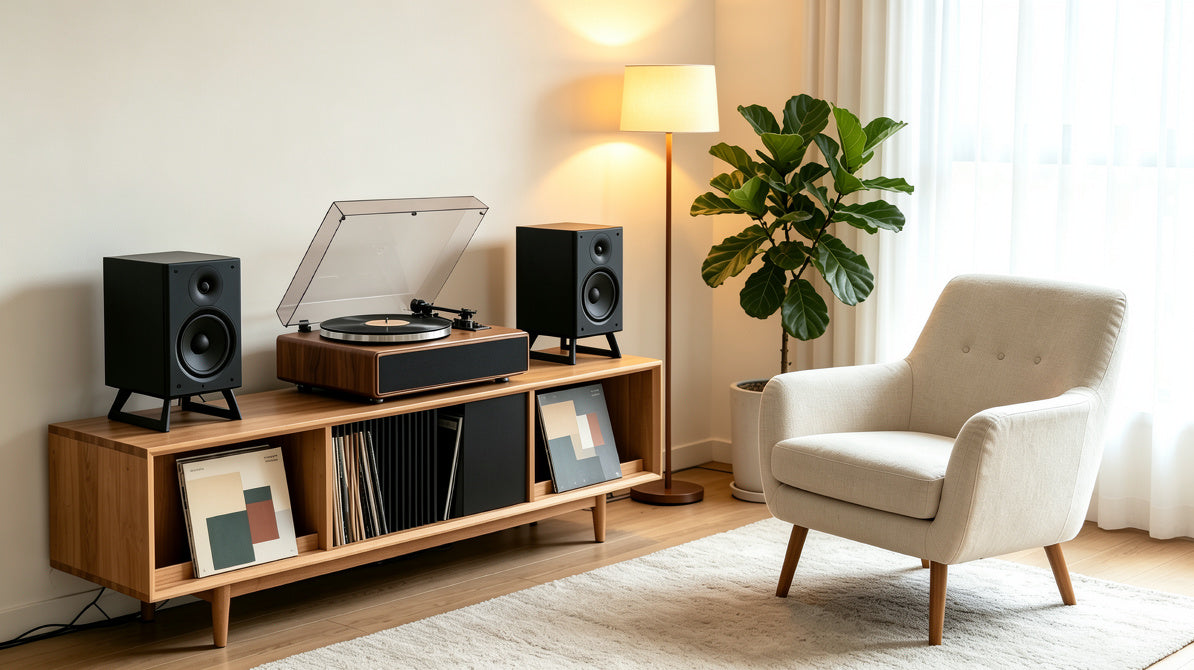
How to Build a Relaxing Listening Corner
Introduction
There's something different about the moment you lower the needle onto a record.
The notifications stop mattering. The endless scrolling fades into the background. Instead of jumping between songs, you settle into an album, letting each track unfold at its own pace.
In a world where music often becomes background noise, vinyl invites us to slow down and listen with intention. And while a great turntable is an important part of the experience, the space around it matters, too.
A thoughtfully designed vinyl listening corner can turn an ordinary room into a personal retreat—a place where music becomes part of your daily routine. Whether you're working with a compact apartment, a shared living space, or an unused corner at home, you don't need a dedicated listening room to create a space that feels inviting and sounds great.
The key is finding the right balance between comfort, layout, and sound. From choosing a stable surface for your turntable and positioning your speakers to creating warm lighting and keeping your record collection organized, a few considered choices can make your home listening space more enjoyable and easier to use.
In this guide, we'll walk through how to build a relaxing listening corner that brings together practical audio setup, thoughtful design, and the simple pleasure of playing records at home.
After all, the best listening corner isn't the most expensive one—it's the one that makes you want to play just one more record.
1. Why Every Home Deserves a Listening Corner
Listening Is Different From Hearing
Most of us hear music throughout the day.
It plays quietly in grocery stores, fills coffee shops, accompanies workouts, and streams through earbuds during our commutes. Music is everywhere, yet much of it becomes part of the background.
Intentional listening is different. It's about giving music your attention—hearing the warmth of an acoustic guitar, noticing the subtle reverb in a vocalist's performance, or following the bass line that shapes the mood of a song.
For many listeners, vinyl makes this experience feel more deliberate. You choose a record, slide it from its sleeve, place it on the platter, and lower the stylus. These small actions create a natural pause between choosing music and enjoying it.
A dedicated listening corner can support that habit. By giving your turntable and records a comfortable, accessible place in your home, you make it easier to step away from everyday distractions and spend time with the music you love.
Why a Dedicated Space Can Help You Unwind
Our surroundings can influence how we use a space and the activities we associate with it. A reading chair invites you to open a book, a breakfast nook makes room for a slower morning, and a well-organized desk helps establish a place for focused work.
A vinyl listening corner can serve a similar purpose.
When your records are easy to reach, your turntable is ready to use, and your seating feels comfortable, listening becomes a simple activity to return to rather than something that requires extra effort. A little separation from screens, clutter, and other distractions can also make it easier to give an album your attention.
You don't need an entire room to create this experience. A quiet corner of the living room, a compact apartment nook, or a small area beside a bookshelf can work just as well when the layout suits your routine.
The goal isn't to create a perfect retreat. It's to make room for a habit you genuinely enjoy.
Vinyl and the Appeal of Slow Living
Slow living is often associated with simple, everyday activities: reading a physical book, brewing coffee, tending to houseplants, or spending an afternoon with a favorite record.
What these activities have in common is the opportunity to focus on one thing at a time.
A thoughtfully designed listening corner brings that idea into your home. Rather than treating music as something that fills every quiet moment, you can make listening a more intentional part of your day.
Small details help. Keep a few favorite records within easy reach, choose lighting that feels comfortable in the evening, and arrange your furniture so you can settle in without constantly adjusting your setup. If you enjoy listening to full albums, leave enough space to turn the record over or change sides without disrupting the experience.
These practical choices make your listening space feel inviting without requiring an elaborate interior redesign.
It's About More Than Audio Equipment
A good turntable is an important part of a vinyl setup, but your overall listening experience also depends on how your equipment and surroundings work together.
Imagine two listening spaces. One has impressive audio components squeezed into a busy hallway, with limited room to sit comfortably and little space to handle records. The other has a stable surface for the turntable, thoughtfully positioned speakers, comfortable seating, and enough room to enjoy an album without unnecessary distractions.
The second space may feel more inviting for everyday listening, even if its equipment is more modest. That doesn't mean room design can replace capable audio equipment. It means the equipment, the room, and the way you use them all contribute to the experience.
Start with the essentials: place your turntable on a stable, level surface, position your speakers with your listening position in mind, and arrange your seating so you can enjoy music comfortably. Keep records organized and accessible, and leave enough room to operate your equipment safely and conveniently.
You can refine the setup over time as you discover what works best for your room, your listening habits, and your audio system.
Great listening is about more than the equipment you own. It's about creating a space that makes you want to sit down, drop the needle, and play just one more record.
2. Choosing the Perfect Spot

You Don't Need an Entire Listening Room
One common misconception is that enjoying vinyl properly requires a dedicated listening room.
A separate room can be wonderful, but it's far from essential. With a little planning, even a small, underused area can become a comfortable place to enjoy your favorite records.
Consider spaces such as:
-
A quiet corner of the living room
-
An unused dining nook
-
A bedroom alcove
-
A loft landing with enough room to sit comfortably
-
A corner of your home office
-
A basement reading area
Rather than focusing on square footage, look for a spot with enough room for your turntable, speakers, records, and a comfortable seat. You'll also want easy access to your equipment without blocking walkways or crowding the rest of the room.
The best location is one that fits naturally into your home and gives you room to listen without feeling cramped.
Think About Your Daily Habits
Instead of asking:
"Where can my turntable fit?"
Ask:
"Where would I naturally want to sit and listen?"
Do you enjoy your morning coffee near a window? Is there a chair where you already like to read? Do you prefer to unwind in the evening away from the television?
Building your listening corner around an existing habit can make it easier to use regularly. A setup that's comfortable and convenient is more likely to become part of your routine than one that requires you to rearrange the room every time you want to play a record.
Think about when you usually listen, how long you like to sit, and whether you prefer listening alone or sharing music with others. These everyday details can help you choose a location that works for your lifestyle.
Natural Light Is Wonderful—Direct Sunlight Isn't
Lighting helps shape the atmosphere of a listening corner. Natural daylight can make a space feel open and inviting, while a warm lamp can create a comfortable setting for evening listening.
The key is to be mindful of direct sunlight and heat.
Prolonged exposure to light can fade record sleeves and album artwork over time. Excessive heat can also cause vinyl records to warp, so avoid storing records where they may become hot from direct sun or nearby heat sources.
If your preferred spot gets strong afternoon sunlight, consider:
-
Using curtains or blinds to soften direct sunlight
-
Choosing UV-filtering window film if appropriate for your space
-
Storing records away from sunny windows and other sources of heat
-
Keeping your turntable and records out of spots that become noticeably hot throughout the day
You don't have to give up a bright, airy corner. A little thought about light and temperature can help protect your collection while keeping the space pleasant to use.
Keep Your Turntable Away From Vibrations
A stable setup is an important starting point for reliable vinyl playback.
Turntables are sensitive to unwanted vibration. Vibrations transmitted through furniture, floors, or nearby speakers can sometimes be picked up by the stylus and affect playback, particularly when low-frequency energy is involved.
When choosing a location, avoid placing your turntable:
-
On lightweight furniture that wobbles when touched
-
Directly beside a powerful subwoofer
-
On a shelf that shares noticeable vibrations with heavy appliances
-
Near doors or walkways where repeated impacts can shake the furniture
Instead, choose a sturdy, level surface that supports your turntable securely. If possible, avoid placing the turntable and speakers on the same surface when that surface is prone to vibration.
You don't necessarily need a specialized audio rack. A well-built media console or stable turntable stand can be a good starting point, provided it suits your equipment and room.
Avoid Competing Sources of Attention
A listening corner doesn't have to be completely separate from your living area, but its placement can influence how you use it.
For example, if your turntable and seating face a television, it can be tempting to leave the screen on while music plays. If your goal is to spend more time focusing on an album, try orienting your seat toward your speakers instead.
You could also position the setup beside a bookshelf, near a favorite chair, or along a wall where the television isn't the main visual focus.
Keep the area around your turntable reasonably uncluttered, too. Leaving space for your records, sleeves, and accessories makes the setup easier to use without turning it into another crowded surface.
The idea isn't to eliminate every distraction. It's to make listening feel like a deliberate choice rather than something happening in the background.
Think About Traffic Flow
Finally, make sure your listening corner works for the way people move through your home.
Avoid placing your chair where people regularly walk behind you, positioning equipment where doors could knock into it, or running cables across busy walkways. Keep enough space to sit down comfortably, reach the controls, change records, and return each sleeve to storage.
If you share your home with family, roommates, or pets, consider how the setup will fit into everyday life. A location that's out of the main traffic flow can help protect your equipment while making listening more comfortable for everyone.
Sometimes, a small adjustment—moving a chair, shifting a console, or changing the direction your speakers face—is enough to make a layout work better.
Before committing to a spot, try sitting there with your usual listening posture in mind. Check that the turntable is easy to reach, the speakers can be positioned sensibly, and the space still feels natural within the room.
Once you've found a location that balances convenience, stability, and comfort, you're ready to think about the furniture and layout that will bring your listening corner together.
3. Choosing Furniture That Invites You to Stay
A great listening corner brings together comfortable furniture, a thoughtful layout, and audio equipment that suits your needs.
It's easy to focus on the turntable and speakers when planning a setup, but the furniture around them matters, too. If your seat is uncomfortable, your records are difficult to reach, or your equipment is awkward to use, you may find yourself cutting listening sessions short.
The goal is to create a space that feels good to use, whether you're listening to one favorite track or settling in for a full album.
Start With the Seat, Not the Speakers
Your chair is where you'll spend much of your listening time, so choose it with care.
Look for seating that offers comfortable support without making it difficult to relax. Depending on your space and preferences, good options include:
-
A lounge chair with a supportive back and gently reclined seat
-
A reading chair paired with an ottoman
-
A compact accent chair for a smaller apartment
-
An armchair with a seat height that feels natural for getting in and out
Think about how you actually listen. If you enjoy sitting through an entire album, make sure the chair remains comfortable over longer sessions. If you like reading liner notes or browsing album covers, consider whether the armrests and seat position make those activities easy.
Your seating position also affects how you hear your speakers. If stereo listening is a priority, arrange your chair and speakers so you can sit comfortably in the intended listening area without awkwardly turning your head or straining to hear.
Comfort and sound don't have to compete. A well-chosen chair can support both.
Choose Furniture That Matches Your Listening Style
There's no single furniture arrangement that works for everyone. The right setup depends on how you enjoy music and how your listening corner fits into everyday life.
If you like reading liner notes while listening, a small side table gives you a convenient place for a record sleeve or a book.
If you enjoy browsing your collection before choosing an album, open shelving or a nearby record crate makes your favorites easy to see and reach.
If you usually listen in the evening, a floor lamp or table lamp can provide comfortable ambient light without taking up much space.
You might also want a dedicated place for record-cleaning supplies, a stylus brush, or other accessories you use regularly. Keeping these items organized helps you avoid searching for them whenever you want to play a record.
A few practical pieces are often all you need. Choose furniture that supports your listening habits rather than trying to recreate a display from a magazine or social media feed.
Select a Stable Surface for Your Turntable
Your turntable needs a secure, level surface that can support its weight and help minimize unwanted vibration.
A sturdy media console, a well-built shelf, or a dedicated turntable cabinet can all work. What matters most is how the furniture performs in your space, not whether it was specifically marketed for audio equipment.
Before choosing a stand, consider:
-
Stability: The surface should remain steady during normal use and shouldn't wobble when you walk nearby.
-
Size and depth: Leave enough room for the turntable, its dust cover if applicable, and convenient access to the controls.
-
Cable management: Allow cables to run without being pinched, sharply bent, or stretched.
-
Equipment storage: If your setup includes an amplifier or other components, make sure the furniture can accommodate them.
-
Ventilation: Leave adequate space around electronic equipment according to the manufacturer's recommendations.
-
Accessibility: Keep the controls, tonearm, and frequently used records easy to reach.
Also consider where your speakers will sit. If your furniture noticeably resonates with bass or other vibrations, placing the turntable and speakers on separate, stable surfaces may help reduce unwanted interference.
You don't necessarily need an expensive audio rack. Start with furniture that is stable, appropriately sized, and suited to your equipment, then refine your setup if you encounter specific problems.
A clean, well-organized surface also helps the whole corner feel more intentional, with your turntable and records taking center stage.
Keep Records Within Reach
Choosing a record is part of the pleasure of listening to vinyl. When your collection is easy to browse, deciding what to play can become a natural part of the experience.
Rather than keeping every album beside your turntable, consider displaying a small selection of current favorites and storing the rest in a separate record shelf or cabinet.
A few simple options include:
-
A record crate beside your listening chair
-
A shelf designed to support the weight of your collection
-
A cabinet with easy-to-access record storage
-
A small display stand for the album you're currently playing
Store records upright and avoid packing them so tightly that removing them becomes difficult. Keep them away from excessive heat and strong direct sunlight, and make sure shelves are suitable for the weight of the collection.
Album artwork can also add personality to your space. Displaying a favorite cover or rotating the album on show gives your listening corner a personal touch without requiring lots of additional decoration.
The aim is to make your collection easy to enjoy while keeping it organized and protected.
Don't Overfill the Space
A well-designed listening corner doesn't need to be filled with accessories. It needs enough furniture and storage to make listening comfortable and convenient.
Before adding another piece, ask whether it serves a useful purpose. Extra equipment, oversized furniture, crowded shelves, and tangled cables can make even a generous room feel busy.
Instead, focus on a few essentials: a comfortable chair, a stable surface for your turntable, accessible record storage, and lighting that suits the space. A plant or a carefully chosen decorative object can add warmth if there's room for it.
Leave clear space around your equipment so you can handle records, operate the tonearm, and move through the room without difficulty. Keep cables tidy and out of walking paths, too.
The result doesn't need to look minimal or perfectly styled. It simply needs to feel considered, personal, and easy to use.
Often, the space you leave between objects is just as important as the objects themselves.
4. Getting Better Sound Without Complicating Your Setup
Better sound doesn't always require more expensive equipment.
In many home listening spaces, adjusting speaker placement and making better use of the room are worthwhile first steps before considering an upgrade. These changes are often free, easy to reverse, and can help you understand what your current system is capable of.
Start with a few simple adjustments and listen for the difference.
Give Your Speakers Room to Breathe
Speaker placement can influence bass response, clarity, and the way music fills a room.
Placing speakers close to a wall can increase bass output at certain frequencies, although the effect depends on the speaker design and the room. Rather than assuming there's one ideal distance, start with the manufacturer's placement recommendations and experiment with what works in your space.
A few useful guidelines:
-
Leave some space between your speakers and the walls, adjusting the distance to suit your room and speaker design.
-
Position the left and right speakers in a reasonably symmetrical arrangement when possible.
-
Keep the speakers at similar distances from your listening position.
-
Try angling the speakers slightly toward your seat, then compare the result with a less direct angle.
These adjustments can help improve stereo imaging, making it easier to locate vocals and instruments within the music.
Think of your speakers as creating an invisible stage. Small changes in their position can affect how wide, balanced, and focused that stage feels.
Form a Listening Triangle
A useful starting point for stereo listening is the listening triangle.
Imagine a line connecting your left speaker, right speaker, and usual seating position. Begin with the distance between the speakers roughly similar to the distance from each speaker to your listening position.
This creates an approximate equilateral triangle and provides a practical baseline for further adjustments.
You don't need specialized tools to get started. Estimate the distances, sit in your usual listening position, and play a familiar recording with clear vocals and distinct instruments.
Listen for whether the lead vocal appears centered, whether instruments feel spread naturally across the stereo image, and whether the sound seems balanced from left to right.
If the image feels too narrow, too wide, or off-center, try moving the speakers in small increments. You can also experiment with toe-in—the angle at which the speakers point toward your seat.
The triangle is a starting point, not a rigid rule. Your room, speakers, and personal preferences will determine the final arrangement.
Use Soft Furnishings to Help Control Reflections
Sound interacts with the surfaces around you. Bare walls, hard floors, and large windows can contribute to reflections that make a room sound lively or, in some cases, overly echoey.
Soft furnishings can help reduce some of these reflections, particularly at higher frequencies, depending on their material, thickness, and coverage.
Consider:
-
Area rugs: Useful for softening a room with a large, hard floor.
-
Curtains: Can reduce some reflections from windows, depending on their fabric and thickness.
-
Upholstered furniture and cushions: Add comfort while absorbing some sound energy.
-
Bookshelves: May scatter sound when their contents create an irregular surface, although the effect depends on their design and arrangement.
You don't need to cover every surface or turn your living room into a recording studio. Start by noticing whether the space sounds particularly echoey, then make one change at a time.
Keep in mind that ordinary furnishings won't solve every acoustic issue. Low-frequency problems, for example, often require different placement adjustments or more specialized treatment.
The goal is to make the room work better for listening without sacrificing its comfort or appearance.

Make the Most of the Room You Already Have
Before buying acoustic accessories, look at the way your existing furniture and equipment are arranged.
A large empty wall, a reflective window, or an awkward speaker position may be worth addressing before adding anything new. A rug, curtains, or a change in furniture placement may help, depending on what's causing the problem.
Plants and decorative objects can make a listening corner feel more personal, but treat them primarily as design choices rather than reliable acoustic solutions.
For a simple experiment, choose a recording you know well and listen from the same seat before and after making one adjustment. Pay attention to vocal clarity, bass balance, and the placement of instruments. Changing several things at once makes it harder to tell what actually helped.
This approach keeps acoustic adjustments practical and affordable, while helping you develop a better understanding of your own system.
Find a Comfortable Listening Volume
Turning up the volume isn't the only way to enjoy music, and louder playback doesn't automatically mean better sound.
Choose a level that lets you enjoy the music comfortably without feeling the need to raise your voice to speak to someone nearby. Be especially mindful of prolonged listening at high volumes, which can contribute to hearing damage.
Very low playback levels can also change how you perceive bass and treble, so there's no single volume setting that reveals every detail equally well. The best level depends on the recording, your room, your equipment, and your own hearing.
If music sounds muddy, unbalanced, or difficult to follow, try checking speaker placement and room reflections before assuming you need new components.
A well-positioned system, a room that suits your listening habits, and a comfortable volume are sensible places to start. You can always explore equipment upgrades later, once you understand what you'd like to improve.
5. Creating an Atmosphere That Makes You Want to Listen
A well-designed listening corner should sound good, feel comfortable, and reflect the way you enjoy music.
Once you've found the right location, chosen your furniture, and arranged your audio equipment, a few thoughtful details can bring the space together. Lighting, natural textures, greenery, and the records you choose to display all help give your listening corner a more personal feel.
You don't need to decorate every surface. Start with a few elements that make the space feel inviting and easy to use.
Layer Your Lighting
Lighting can change the feel of a room without requiring a major redesign.
Rather than relying on a single overhead light, try combining different sources to suit different activities:
-
A floor lamp beside your listening chair
-
A small table lamp for softer, localized light
-
Indirect lighting to add a gentle glow
-
Dimmable bulbs that let you adjust the brightness for different times of day
For a warm, cozy atmosphere, consider warm-white lighting around 2700K. Brighter or more neutral lighting can be useful when you're browsing your collection, reading album notes, or adjusting your equipment.
The goal is flexibility: enough light to handle your records comfortably, with the option to create a softer atmosphere when you settle in to listen.
If you choose dimmable lighting, make sure the bulbs and dimmer are compatible. Keep lamps and their cables positioned safely away from your turntable, records, and walking paths.

Add Texture, Not Clutter
A room can look beautifully minimal and still feel a little cold. Introducing a few contrasting textures helps create warmth without making the space feel crowded.
Consider pairing a wood console with an upholstered chair, adding a linen cushion, or placing a wool throw over the arm of your seat. A woven basket can also provide practical storage for accessories while introducing a different texture.
You don't need to use every material at once. Choose two or three that complement your existing furniture and audio equipment.
For a contemporary look, keep the overall palette fairly consistent and let the contrast between materials do the work. Wood can soften the appearance of metal equipment, while fabric adds a more relaxed feel to clean-lined furniture.
The result should feel personal and lived-in rather than carefully staged.
Bring Nature Indoors
A plant can add color, soften straight lines, and bring a natural element into a listening corner.
If you want something relatively easy to care for, consider a snake plant, a ZZ plant, or a pothos, choosing one that suits the available light and your home's conditions.
A small plant on a nearby side table or a larger one beside a console can create visual balance without taking over the space. Just make sure pots are stable, water cannot spill onto electronics, and leaves don't obstruct equipment or controls.
There's no need to turn your listening corner into an indoor garden. One well-placed plant may be all you need to add a little life to the room.
Let Your Collection Tell Your Story
Your record collection can be one of the most personal elements of your listening corner.
Rather than hiding every album away, consider displaying a few favorites or keeping the record you're currently enjoying on a suitable display stand. Open shelving can make it easy to browse your collection, while a framed album cover can add a distinctive visual accent.
A few ideas to try:
-
Display an album cover that means something to you.
-
Keep a small selection of frequently played records within easy reach.
-
Rotate the covers on display whenever your musical tastes or mood change.
-
Mix records with a few carefully chosen books or personal objects on open shelves.
The key is to make the display feel connected to your listening habits rather than purely decorative.
Remember to protect your collection, too. Keep records away from excessive heat and strong direct sunlight, and store them upright in suitable storage. If you frame an album cover, consider displaying the sleeve or a print rather than leaving a playable record exposed.
Your collection doesn't need to look like a showroom. The albums you return to most often can tell a story all on their own.
Make Listening a Simple Ritual
Small habits can make it easier to return to your listening corner regularly.
You might put on a favorite record while enjoying your morning coffee, choose an album to accompany a quiet evening, or set your phone aside while you listen to a side from beginning to end.
The details are personal. What matters is making the experience easy to begin.
Keep your favorite records accessible, leave the turntable ready for normal use, and make sure the lighting is comfortable for the time of day you usually listen. If you enjoy a particular routine, such as reading liner notes or making a cup of tea before putting on a record, give yourself a convenient place to do it.
If you like candles, use them cautiously: keep open flames away from records, furniture, and cables, and never leave a burning candle unattended. A lamp can provide a similar sense of warmth without an open flame.
Over time, these small choices can help make listening a natural part of your day—not another task to organize, but something you look forward to.
6. Personalizing Your Listening Corner for the Way You Live
A listening corner should fit the way you live, not just the way a room looks in a photograph.
Once you've planned your seating, equipment placement, and storage, think about how the space can work with your home and listening habits. Whether you live in a compact apartment, share a living room, or have a particular way of enjoying music, a few thoughtful choices can make your setup feel more personal and practical.
If You Live in a Small Apartment
Limited space doesn't mean you have to give up a dedicated place to enjoy your records.
The key is choosing furniture and equipment that fit comfortably without making the room harder to use.
A compact media console can provide space for your turntable and record storage. A reading chair can double as your listening seat, while a wall-mounted shelf can keep accessories organized without taking up additional floor space, provided it is securely installed and suitable for the load.
A few other ideas can help make a small setup work:
-
Use vertical storage: Choose sturdy shelving designed to support the weight of your records, and keep albums upright and easy to reach.
-
Keep the layout flexible: Leave enough room to sit down, handle records, and access your equipment without moving several pieces of furniture.
-
Manage cables carefully: Route cables neatly and keep them away from walkways to make the area safer and less cluttered.
-
Be considerate of neighbors: Keep playback at a reasonable level, especially in the evening, and pay attention to how bass travels through shared walls and floors.
Speaker stands or isolation products may help with particular vibration issues, but they won't necessarily prevent sound from reaching neighboring apartments. If noise transmission is a concern, reducing playback volume—particularly deep bass—is often a more practical first step.
You don't need to fit everything into one corner. Start with the essentials and add storage or accessories only when they serve a clear purpose.
If Your Listening Corner Is in a Shared Living Room
When your listening area shares space with a television, dining table, or family seating, the goal is to make the setup feel like a natural part of the room.
Start by considering the existing furniture, colors, and layout. A turntable console that complements your other furniture can help tie the space together, while neatly arranged records and well-managed cables keep the area looking intentional.
You can also define the listening area without adding a partition or dedicating an entire wall to audio equipment.
For example:
-
Position a comfortable chair and side table near the turntable, where the layout allows.
-
Use a rug or a change in furniture arrangement to visually distinguish the listening area.
-
Keep frequently played records accessible while storing the rest of your collection neatly.
-
Choose equipment finishes and furniture materials that work with your existing décor.
If the room also serves as a television area, consider whether your speakers and seating can be arranged for both activities without compromising everyday movement around the room.
The aim isn't to hide your equipment or make your listening corner look like a showroom. It's to create a setup that works for shared living while still giving music a place of its own.
Build Around Your Favorite Music
The way you listen can help determine what your space needs.
If you enjoy listening to full albums from beginning to end, prioritize a comfortable seat and convenient access to your turntable. If you often read liner notes or explore album artwork, keep enough room for sleeves and a book or side table.
If discovering unfamiliar music is part of the fun, make browsing your collection easy. Open shelving, accessible record storage, or a small display for recently acquired albums can help you see what you want to play next.
You might also tailor the setup to when you usually listen. A reading lamp can be useful for browsing records in the evening, while a location near your usual morning coffee spot may make it easier to fit music into your day.
Your musical tastes don't have to dictate a particular decorating style. Jazz, classical, rock, electronic music, and everything in between can all belong in a space that reflects your personality.
Think about what makes listening enjoyable for you, then let those preferences guide the details. A well-chosen chair, accessible collection, or carefully arranged speaker setup can be more meaningful than adding decorative pieces that you rarely use.
Ultimately, the most personal listening corner is one that supports the way you actually enjoy music—and makes it easy to return to your records whenever the mood strikes.
7. Common Mistakes That Can Ruin the Experience
A listening corner doesn't need to be complicated, but a few overlooked details can make it less enjoyable or harder to use.
The good news is that many common mistakes are easy to avoid—and you often don't need to spend more money to fix them.
Treating the Turntable Like Ordinary Furniture
A turntable needs a stable, level surface and a setup that suits its design.
Placing it on furniture that wobbles, positioning it where footsteps cause noticeable vibration, or setting it too close to a subwoofer can interfere with playback in some setups.
Strong direct sunlight and excessive heat are also worth avoiding, particularly when storing vinyl records nearby. Heat can warp records, while prolonged exposure to sunlight may fade album sleeves and artwork.
To help protect your equipment and collection:
-
Choose a sturdy, level surface for your turntable.
-
Keep the turntable away from noticeable sources of vibration where possible.
-
Store records away from excessive heat and strong direct sunlight.
-
Follow the manufacturer's guidance for equipment placement, ventilation, and maintenance.
You don't necessarily need a specialized audio rack. A stable, appropriately sized piece of furniture can work well when it suits your equipment and room.
Buying Too Much Too Soon
It's easy to assume that a better listening experience requires more expensive equipment.
But before upgrading, take time to understand what you'd actually like to improve. If the sound seems unbalanced, try adjusting speaker placement. If the room feels uncomfortable, reconsider the seating or lighting. If records and accessories are difficult to reach, improve the layout before buying more storage.
These changes may address the problem without requiring new audio components.
Of course, room adjustments can't compensate for every equipment limitation. If your current system isn't meeting your needs, an upgrade may be worthwhile—but you'll make a more informed choice when you understand what is missing.
Build your turntable setup gradually, focusing on practical improvements rather than buying equipment simply because it's the next item on a checklist.
Ignoring Cable Management
Loose or tangled cables can make a listening corner look cluttered, create tripping hazards, and make it harder to clean or maintain the area.
A few simple solutions can keep everything organized:
-
Use cable clips or sleeves to group cables neatly.
-
Make sure cables aren't stretched tightly or sharply bent.
-
Keep power and audio cables arranged sensibly, following the equipment manufacturer's recommendations.
-
Avoid routing cables across walkways or beneath furniture where they could be crushed.
-
Leave enough slack to move equipment safely when cleaning or making adjustments.
If you're using a media console, built-in cable channels can help keep connections out of sight. Just make sure power supplies and other equipment that generate heat have adequate ventilation.
Good cable management isn't only about appearance. It makes your setup safer, easier to maintain, and more convenient to use.
Forgetting to Actually Listen
It's possible to spend hours researching turntables, comparing speakers, rearranging furniture, and planning the next upgrade—without making much time to enjoy the records you already own.
Remember what the setup is for.
You don't need perfect speaker placement, a fully styled room, or an expensive system before you can enjoy a favorite album. Start with a setup that's stable, comfortable, and easy to use, then make adjustments when you notice something that could work better.
Put on a record you've been meaning to revisit. Explore an album you haven't played in a while. Or simply make time for a few songs when it fits your day.
There's always something you could improve, but not every improvement needs to happen now.
The best setup is one that suits your needs, works within your budget, and gives you more opportunities to enjoy music.
8. A Simple Checklist Before You Call It Finished
Before settling in for a listening session, take a moment to check that your setup is comfortable, practical, and ready to use.
Listening Corner Checklist
- A comfortable seat for your usual listening sessions
- A stable, level surface for your turntable
- Speakers positioned sensibly for your room and listening seat
- Lighting that's comfortable for listening and handling records
- Records stored upright, away from excessive heat and strong direct sunlight
- Cables organized and kept clear of walking paths
- Soft furnishings, if needed, to help reduce some room reflections
- Convenient space for album sleeves, books, or other listening essentials
- A few personal touches that make the space feel like yours
- Enough room to sit comfortably, change records, and operate your equipment safely
You don't need to check every box to create a great listening corner. Start with the essentials: a stable turntable, sensible speaker placement, accessible record storage, and a comfortable place to sit.
Everything else can evolve with your space, your equipment, and the way you enjoy music.
The goal isn't to create a perfect room. It's to create a setup that makes listening easy, enjoyable, and worth coming back to.
9. Bringing Modern Vinyl Living Into Your Home
A relaxing listening corner isn't about having the biggest room or the most expensive equipment. It's about creating a space that fits your home and makes you want to spend time with music.
A comfortable chair, thoughtfully positioned speakers, warm lighting, and a favorite record can make listening feel like a welcome part of your everyday life.
That's part of the enduring appeal of vinyl. Choosing an album, taking it from its sleeve, and setting it on the turntable gives you a simple way to engage with music more deliberately.
Your listening corner can evolve as your needs change. You might rearrange your furniture, expand your record collection, or upgrade your audio system over time. There's no need to get everything right from the beginning. Start with a setup that works for your space, then make improvements as you discover what you enjoy most.
At AUDURA, Modern Vinyl Living is about bringing the experience of vinyl into contemporary homes through thoughtful design and practical listening solutions. When choosing a turntable or audio system, look for equipment that suits your listening preferences, fits your space, and works well with the rest of your setup.
Whether you have a dedicated listening room or just enough space for a chair and a turntable, you can create a corner that feels distinctly yours.
Start with a favorite album. Find a comfortable seat. Make a little room for music.
And let the listening begin.

Frequently Asked Questions
1. How much space do I need for a vinyl listening corner?
You don't need a dedicated room. A small area with enough space for your turntable, speakers, record storage, and a comfortable seat can be a good starting point. The exact footprint depends on your furniture, equipment, and how you arrange the space.
2. Can I build a listening corner in an apartment?
Absolutely. Choose a layout that fits your space, position your speakers thoughtfully, and keep the listening volume considerate of your neighbors. If you're concerned about noise traveling through walls or floors, reducing the volume—particularly deep bass—is often a practical first step.
3. Should my turntable be next to my speakers?
Your turntable can share the same general area as your speakers, but avoid positions where speaker vibrations noticeably affect playback. A stable, level surface and sensible speaker placement are good starting points. Separate surfaces may help if your furniture transmits unwanted vibration.
4. What's the best lighting for a listening corner?
Warm-white lighting can create a cozy atmosphere, and around 2700K is a popular starting point. A floor lamp or table lamp can provide softer light than a bright overhead fixture, while enough task lighting helps when browsing records or reading album notes.
5. Do I need acoustic panels?
Not necessarily. Try adjusting speaker placement and assessing how your room sounds before investing in acoustic treatment. Rugs, curtains, and upholstered furniture can help reduce some sound reflections, depending on their materials and coverage. More specialized treatment may be useful if you have persistent acoustic problems.
6. What's the biggest mistake beginners make?
One common mistake is buying equipment before identifying what their setup actually needs. Start with a stable turntable surface, sensible speaker placement, and a comfortable listening area. Once you've tried a few adjustments, you'll be better equipped to decide whether an equipment upgrade would help.
7. How should I store my vinyl records?
Store records upright in suitable storage, away from excessive heat, strong direct sunlight, and damp conditions. Avoid stacking records horizontally for extended periods or packing them so tightly that they become difficult to remove. Appropriate inner sleeves and protective outer sleeves can also help keep records and album covers in good condition.
8. Can a listening corner also be part of my living room?
Definitely. A listening corner can fit naturally into a shared living space. Choose furniture and finishes that complement your existing décor, keep records organized, and arrange your seating and speakers to suit both your listening habits and the room's everyday use.
Start Building Your Vinyl Listening Corner
Creating a listening corner doesn't have to happen all at once. Start with the space you have, make a few practical adjustments, and build around the way you enjoy music.
Whether you're refining an existing setup or choosing your first turntable, the right starting point is equipment that suits your space, listening preferences, and budget.
At AUDURA, we believe vinyl listening should feel at home in modern living spaces. Explore our turntables and find a setup that fits naturally into your everyday life.
Make room for music. Make it your own.
