Why Does Vinyl Sound Different From Digital Music?
Introduction: Why Does Vinyl Feel Different From Digital Music?
For most people today, music has never been easier to access.
Millions of songs are available instantly. Streaming makes it possible to discover new artists, build playlists, and listen almost anywhere.
Digital music has transformed the way we discover and listen to music. It is convenient, portable, and almost limitless.
Yet vinyl has found a new place in modern listening.
Not because streaming disappeared. Not because digital music stopped sounding good. And not because everyone suddenly wants to live in the past.
Vinyl listening can feel different because it asks us to slow down.
Choosing an album, placing a record on the turntable, lowering the stylus, and sitting with the music creates a small moment of intention in a world designed for constant speed.
A vinyl record is more than another way to play a song. It is a physical listening experience that brings together sound, design, memory, and personal space.
For new listeners, this raises an interesting question:
What actually makes vinyl sound and feel different from digital music?
The answer is more nuanced than simply saying that vinyl sounds “better.”
The difference comes from both the way music is reproduced and the way we experience it — from analog playback and mastering to the physical ritual of choosing and playing a record.
In this guide, we’ll explore what makes vinyl different from digital music, why the format continues to attract modern listeners, and how a thoughtful vinyl setup can make music feel more intentional at home.
1. Why Vinyl Creates a More Intentional Listening Experience
Digital Music Is Designed for Convenience
Streaming has fundamentally changed how we discover and listen to music.
With digital music, the process takes seconds. You can search for an artist, start an album, build a playlist, or discover something new with almost no friction.
That convenience is one of digital music's greatest strengths. You can listen while working, exercising, commuting, cooking, or simply moving through your day.
But convenience can also change the way we pay attention.
Music can easily become part of the background rather than the focus of the room. A playlist continues automatically, songs change with a tap, and an album can become one more layer of sound around us.
There is nothing wrong with this. Digital listening is an incredible tool.
But vinyl creates a different kind of relationship with music.
The Ritual of Playing a Record Changes How We Listen
One of the biggest differences between vinyl and digital music is the physical process.
A vinyl listening session usually involves several small actions:
-
selecting an album
-
handling the record carefully
-
reading the artwork and liner notes
-
placing the record on the platter
-
lowering the stylus
-
listening through a side of the record
These small actions create anticipation and give the listening session a clear beginning.
The music does not simply appear. You participate in bringing it into the room.
That physical interaction can make listening feel more deliberate, especially when it replaces multitasking with a dedicated moment for music.
It turns listening from a background activity into something more intentional.
Why Intentional Listening Matters at Home
At home, small rituals can create a clearer separation between everyday activity and time spent simply listening.
Vinyl fits naturally into this kind of environment.
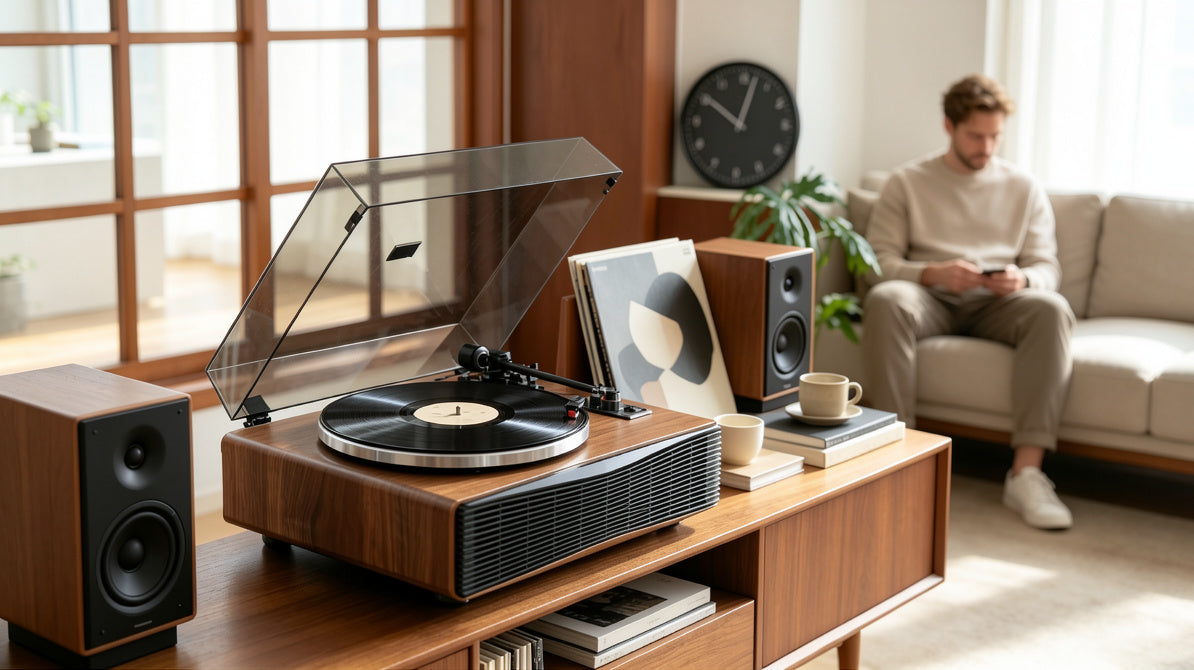
A turntable can be more than an audio component. It can also become part of the room's visual character — a piece of equipment that brings sound, design, and physical interaction into the same space.
This is one reason vinyl continues to appeal to modern listeners.
The format offers something digital music does not always require: a deliberate beginning, a physical connection to the album, and a reason to give the music your attention.
For many listeners, that sense of intention is an important part of vinyl's appeal.
2. Why Does Vinyl Sound Different From Digital Music?

Is Vinyl Sound Actually Better?
This is one of the most debated questions in audio.
The honest answer is simple:
It depends on what you mean by “better.”
Digital audio has clear technical advantages. Modern digital formats can offer very low noise, high consistency, wide dynamic range, and highly accurate reproduction. Streaming also makes it possible to access an enormous library of music almost instantly.
Vinyl works differently.
A record stores an analog representation of the music in a physical groove. During playback, the stylus traces that groove, and the cartridge converts its movement into an electrical signal. That signal is then amplified and reproduced through the rest of the audio system.
This physical playback process introduces its own characteristics.
That does not make vinyl inherently more accurate than digital audio. It simply means the two formats can produce different results, depending on the recording, mastering, pressing, playback equipment, and listening environment.
The Warmth People Associate With Vinyl
Many listeners describe vinyl playback as sounding:
-
warm
-
smooth
-
slightly rounded
-
textured
-
spacious
These descriptions are subjective rather than universal properties of every vinyl system.
What a listener hears depends on much more than the format itself. The mastering of the record, the quality of the pressing, the cartridge and stylus, turntable setup, phono stage, amplifier, speakers, and room can all influence the final sound.
Vinyl playback can also introduce characteristics that listeners may perceive as part of its sonic character, including subtle harmonic distortion, low-level surface noise, and differences in transient or high-frequency presentation.
These characteristics are not necessarily more accurate than digital audio.
They are simply different.
When Imperfection Becomes Part of the Experience
Vinyl also has something digital playback does not need to have: a physical playback process.
A faint layer of surface noise. The subtle sound of the stylus entering the groove. The visible movement of the record as it spins.
For some listeners, these details become part of the character of the format.
They make playback feel more tangible. You can see the record turning, interact with the equipment, and physically follow the process from choosing an album to hearing the first track.
In that sense, vinyl's imperfections are not necessarily flaws to be celebrated or eliminated. They are simply part of the format — and for many listeners, part of what makes the experience distinctive.
Vinyl Can Change How We Pay Attention
There is also a difference between having music playing and intentionally listening to it.
Digital music makes background listening effortless. Vinyl can encourage a more deliberate approach because starting playback involves a few physical steps and because a record usually asks you to stay with a side of music for a period of time.
When listening becomes more deliberate, familiar albums can also reveal details that might be overlooked during casual or multitasked listening.
This is where the difference between vinyl and digital becomes more interesting.
It is not only about the signal path or the technical characteristics of the format.
It is also about how the format changes the way we interact with music.
3. Why Vinyl Feels More Personal
Why Physical Music Feels Personal
A digital library can contain thousands of songs.
But a physical record collection can tell a story.
A record can represent something specific:
-
a concert you attended
-
a gift from someone important
-
an artist you discovered during a particular period of your life
-
a favorite album from your teenage years
-
a record you searched for months to find
Over time, the physical record can become part of the memory itself.
You remember not only the music, but also where you found the album, who gave it to you, or what was happening in your life when you first listened to it.
That physical connection is difficult to recreate with a digital file.
Album Artwork Becomes Part of the Experience
Album artwork has always been an important part of music culture.
But digital listening can make it easy to overlook. A song can begin playing without the listener ever seeing the full album, reading the credits, or holding the artwork in their hands.
Vinyl puts those elements back into the physical experience of listening.
A 12-inch record sleeve gives album artwork room to be appreciated, including:
-
photography
-
artwork
-
typography
-
lyrics
-
visual design
For many listeners, an album becomes more than a collection of songs.
It can become a complete artistic experience — one that combines music, visual design, and physical presence.

A Record Collection Becomes Part of the Home
A digital music library can hold thousands of albums without taking up physical space.
A record collection is different because it has a visible, physical presence.
The albums you choose can become part of your home and, over time, reflect your taste, memories, and interests.
This is also where the turntable itself becomes part of the experience.
A thoughtfully designed vinyl setup can become part of the room — combining audio equipment, visual design, and a dedicated place to listen.
For modern listeners, this physical presence is one of vinyl's lasting appeals.
The record is not simply a storage format for music.
It is something you can hold, display, revisit, and associate with moments in your life.
4. How Vinyl Fits Into a Modern Home

The Myth That Vinyl Requires a Complicated Setup
One reason some people hesitate to try vinyl is the belief that it requires a complicated setup.
They imagine:
-
expensive equipment
-
complicated cables
-
large speaker systems
-
dedicated listening rooms
-
constant maintenance
Dedicated hi-fi systems can certainly become highly sophisticated. Enthusiasts may build systems with separate components, carefully matched equipment, and extensive room optimization.
But vinyl does not have to be complicated.
Modern turntables and integrated vinyl systems can be designed for everyday homes, from city apartments to larger living spaces.
You do not need a dedicated listening room to enjoy records.
The goal is not to build the most complicated system possible. It is to create a setup that fits naturally into your home and makes you want to listen.
Modern Vinyl Is About Integration, Not Isolation
For some enthusiasts, building and refining an audio system is part of the enjoyment. Different components, speakers, cartridges, and system configurations can all become part of the hobby.
But not every vinyl listener wants the equipment to become the main focus.
A modern vinyl setup can be designed around the way you actually live.
It can work alongside:
-
your existing furniture
-
your available space
-
your everyday routines
-
the way you listen to music
This is where simpler turntables and integrated vinyl systems can make sense.
The equipment becomes part of the room rather than something that takes over the room.
A Simple Vinyl Setup Can Start Small
You do not need an entire room dedicated to music.
A practical vinyl setup can start with just a few essentials.
A Turntable or Complete Vinyl System
Choose equipment based on how you actually plan to listen.
A beginner may prefer:
-
simple setup
-
fewer components
-
straightforward operation
An experienced listener may prefer:
-
separate speakers
-
an upgraded cartridge
-
more control over individual components
There is no single setup that is right for everyone.
The best vinyl setup is the one you will actually use.
Record Storage Within Easy Reach
Records are meant to be played, not hidden away.
Keeping your collection accessible makes it easier to browse, choose an album, and return to the listening ritual regularly.
Good storage can also become part of the visual character of the room.
AUDURA’s Approach to Modern Vinyl Living
AUDURA takes a modern approach to vinyl by bringing together:
-
analog playback
-
clean, contemporary design
-
straightforward operation
-
modern connectivity
The goal is not to separate vinyl from modern life.
It is to make the format easier to enjoy within it.
A well-designed vinyl system should make listening easier, not turn the experience into another technical project.
5. How Vinyl Changes the Way We Experience Albums
Streaming Changed How We Discover Music
Digital platforms have transformed music discovery in positive ways.
Listeners can explore artists from around the world, discover new genres, and access decades of recorded music almost instantly.
Streaming also makes it easy to move between songs, artists, playlists, and albums without committing to a single listening session.
That flexibility is one of digital music's greatest strengths, but it can also make the album format less central to everyday listening.
Vinyl naturally brings the album format back into focus.
When you choose a record and place it on the turntable, you are more likely to experience the music as a sequence rather than as a collection of individual tracks.
The Album as a Complete Artistic Statement
Many albums, old and new, are designed with sequencing and pacing in mind.
Artists and producers may consider:
-
song order
-
pacing
-
emotional transitions
-
opening and closing tracks
When an album is designed as a cohesive work, listening through a side — or across both sides — can make its structure easier to appreciate.
The physical format also creates natural pauses. When one side ends, you have to turn the record over before continuing.
This does not mean every album needs to be listened to from beginning to end.
It simply gives listeners the opportunity to experience an album as a complete work rather than jumping directly from one track to another.

Why Vinyl Can Feel New to Digital-Native Listeners
For people who have grown up with streaming and digital entertainment, vinyl can offer something that digital listening does not require: physical interaction with the music.
You choose an album.
You handle the record.
You place it on the turntable.
You start playback.
The process is simple, but it makes the music feel more tangible.
A vinyl collection is also something you can hold, display, revisit, and build over time.
That physical presence can give an album a different kind of significance — especially when the record becomes associated with a particular person, place, or period of life.
A Beginner’s Approach: Start With Meaning, Not Quantity
For new listeners, the goal does not have to be building a large collection quickly.
A small collection of records you genuinely love can be more rewarding than a large collection you rarely play.
When choosing a record, ask yourself:
-
Do I love this album?
-
Will I listen to it repeatedly?
-
Does it represent a memory or feeling?
-
Does it make me want to put the record on?
The value of a vinyl collection is not measured only by how many records it contains.
It is also measured by how often those records become part of your listening life.
6. Why Vinyl Can Create Connection in a Digital World
A Physical Format in a Digital Age
Modern technology has made music easier to access than ever.
A song can be played instantly, a new artist can be discovered in seconds, and an entire music library can fit in a phone.
Vinyl offers a different kind of interaction.
The format gives music a physical presence. You choose a record, take it from the shelf, place it on the turntable, and make the decision to listen.
That process can create a small but meaningful break from the speed of everyday digital life.
Vinyl does not replace digital listening.
Instead, it can add another way to experience music — one that involves physical objects, deliberate choices, and more visible participation.
Listening Can Become a Shared Experience
A vinyl setup can also make listening a more social activity.
Unlike a personal playlist that can disappear into the background, a turntable is often visible within the living space. Choosing a record can become part of the conversation.
Friends can introduce each other to favorite albums.
Partners can develop their own listening routines.
Families can share records across generations.
The music becomes something that people can choose, discuss, and experience together.
This does not mean vinyl is inherently more social than digital music. Digital listening can also be deeply shared.
The difference is that a physical record can make the act of choosing and playing music more visible.
Why the Experience Matters
For many vinyl listeners, the appeal of the format extends beyond sound quality alone.
The experience can involve several things at once:
-
choosing a record
-
handling the physical album
-
listening through a side of music
-
discovering or revisiting album artwork
-
sharing music with other people
-
building a collection over time
These elements do not make vinyl technically superior to digital audio.
They explain why the format can remain meaningful even in a world where digital music is more convenient and often technically more consistent.
Vinyl's appeal is therefore not only about how music is reproduced.
It is also about how the format shapes the way we choose, experience, and share music.
For modern listeners, that combination of physical interaction, intentional listening, and shared experience is part of what makes vinyl continue to feel relevant.
7. Choosing Between Vinyl and Digital? You Can Have Both
Vinyl and Digital Serve Different Listening Needs
The conversation is often framed as a choice:
Vinyl or digital?
For modern listeners, there is no reason that it has to be one or the other.
Vinyl and digital music offer different ways to access and experience the same thing: recorded music.
| Vinyl | Digital Music |
|---|---|
| Physical interaction | Instant access |
| Album-focused listening | Flexible listening |
| Physical collection | Large digital library |
| Deliberate listening ritual | Effortless everyday playback |
| Designed for home listening | Easy to use almost anywhere |
These differences do not make one format universally better.
They simply make each format useful in different situations.
A listener might stream music while commuting, discover a new artist through a playlist, and later buy a favorite album on vinyl.
That is not a contradiction.
It is a natural way of combining modern convenience with a more intentional listening experience.
When Vinyl Adds Something to Your Listening Life
Vinyl can make particular sense if you enjoy:
-
spending dedicated time with music
-
listening to albums rather than individual tracks
-
collecting physical records
-
appreciating album artwork and physical design
-
creating a dedicated listening space at home
-
making music part of your surroundings
The appeal does not have to be purely technical.
For many listeners, the value comes from the combination of playback, physical interaction, design, and attention.
When Digital Music Remains the Better Tool
Digital music is hard to beat when convenience matters.
Streaming works especially well for:
-
discovering new artists
-
exploring unfamiliar genres
-
building playlists
-
listening while traveling
-
exercising or commuting
-
accessing a large library without physical storage
These are not compromises.
They are some of the reasons digital music has become such an important part of modern listening.
A Modern Listener Can Use Both
There is no rule that says a vinyl listener has to give up streaming.
In fact, the two formats can work together naturally.
You might discover an album through streaming, listen to it several times, and decide that it is one you want to own.
You might then return to the vinyl version when you want to give the album more focused attention.
Digital music can make discovery easy.
Vinyl can make ownership and intentional listening feel more tangible.
That combination reflects how many people listen to music today.
The goal is not to choose between the past and the future.
It is to build a listening experience that works for the way you actually live.
8. Common Mistakes New Vinyl Listeners Should Avoid
Starting a vinyl setup does not have to be complicated.
But a few common mistakes can make the experience more expensive or frustrating than it needs to be.
Mistake 1: Choosing Equipment Before Defining How You Listen
It is easy for new listeners to get caught up in specifications.
They may start by comparing:
-
cartridge types
-
speaker power
-
tracking force
-
technical measurements
-
connectivity options
These specifications can matter, but they make more sense once you understand how you actually plan to use the system.
Start with a few practical questions:
-
Where will you listen?
-
How much space do you have?
-
How often will you play records?
-
Do you prefer a simple system or the ability to upgrade individual components?
-
Will you also use the system for digital music?
Your answers can help determine what kind of turntable, speakers, connectivity, and system configuration make sense for you.
The right setup is not necessarily the one with the most specifications.
It is the one that fits your listening habits and makes you want to use it regularly.
Mistake 2: Expecting Vinyl to Automatically Sound Better
Vinyl is not a guarantee of better sound.
A record's playback quality depends on the entire chain, including:
-
the original recording and mastering
-
pressing quality
-
record condition
-
turntable performance
-
cartridge and stylus
-
tracking force and alignment
-
phono stage
-
amplifier and speakers
-
listening environment
A well-mastered digital recording can sound excellent. A well-produced and well-pressed record can also sound excellent.
The two formats simply use different playback systems and can produce different listening experiences.
Enjoying vinyl does not require believing that analog is always superior.
It is enough to appreciate what the format offers — both sonically and as a physical way of listening.
Mistake 3: Underestimating the Listening Environment
Even a capable audio system can be affected by the space around it.
For speaker-based vinyl playback, factors such as speaker placement, listening position, room reflections, and furniture can influence what you hear.

Common problems include:
-
placing speakers too close to walls or corners
-
positioning speakers at very different distances from the listening position
-
placing the turntable on an unstable surface
-
ignoring excessive room reflections
You do not need a professionally treated listening room to enjoy vinyl.
Start with sensible speaker placement, a stable surface for the turntable, and a comfortable listening position.
Small changes to the setup can sometimes make a bigger difference than upgrading equipment immediately.
Mistake 4: Neglecting Record and Stylus Care
Vinyl is a physical format, which means both records and playback components benefit from proper care.
Dust and debris on a record can contribute to unwanted noise and can interfere with clean playback.
The stylus also needs to be kept clean and handled carefully.
Basic habits include:
-
handling records by the edges and label area
-
storing records in suitable sleeves
-
keeping records away from excessive heat and direct sunlight
-
keeping the stylus clean
-
following the manufacturer's guidance for stylus and turntable maintenance
Good maintenance does not need to become a complicated routine.
It simply helps protect your records and keep the playback system performing consistently.
Mistake 5: Collecting Too Quickly
A large record collection is not the goal.
For new listeners, buying too many records too quickly can make it harder to understand what you actually enjoy.
Start with albums you genuinely want to hear.
Buy records that you are likely to play repeatedly rather than simply adding titles to a shelf.
Over time, your collection can become a reflection of your taste, memories, and listening habits.
The best collection is not necessarily the largest one.
It is the one that gives you a reason to keep listening.
A Simple Checklist for Creating Your Modern Vinyl Setup
You do not need to build a complicated system to start enjoying vinyl.
Before choosing your equipment, take a few minutes to think about how you want to listen.
Your Space
☐ Where will the turntable be placed?
☐ Is the surface stable and level?
☐ Is the turntable easy to access and operate?
☐ Where will the speakers be positioned?
☐ Does the setup fit naturally into your room?
Your Listening Habits
☐ Do you mainly listen to complete albums, individual tracks, or both?
☐ Will you usually listen alone or with others?
☐ Will vinyl be your primary listening format or one part of a larger digital-and-analog setup?
☐ Do you prefer simple operation or the ability to customize and upgrade components?
Your Equipment
☐ Do you want an all-in-one or integrated system?
☐ Would you prefer separate turntable, amplifier, and speaker components?
☐ Do you need Bluetooth or other digital connectivity?
☐ Does the system include the phono stage you need, or will you need a separate one?
☐ Are the turntable and speakers appropriate for the space where you will listen?
Your Records
☐ Start with albums you genuinely want to play
☐ Handle records carefully
☐ Store records vertically in suitable sleeves
☐ Keep records away from excessive heat, moisture, and direct sunlight
☐ Learn the basic care requirements for your records and stylus
Before You Buy
The best vinyl setup is not necessarily the most expensive or technically complex.
It is the system that matches your space, listening habits, equipment preferences, and everyday routine.
Start with how you want to listen.
Then choose the equipment that makes that experience easy to enjoy.
If you are still deciding what type of setup fits your needs, a vinyl setup guide or setup finder can help you compare different approaches before you buy.
FAQ: Vinyl Listening in a Digital World
1. Why does vinyl listening feel different from streaming?
Vinyl can feel different from streaming because it combines music playback with physical interaction.
You choose a record, place it on the turntable, lower the stylus, and listen through a side of the album. These steps create a more deliberate listening process.
Streaming is designed around speed, accessibility, and flexibility. Vinyl adds a physical element that can make listening feel more intentional and personal.
2. Does vinyl actually sound better than digital music?
Not necessarily.
Modern digital audio can provide excellent accuracy, low noise, wide dynamic range, and consistent playback. Vinyl can also sound excellent, but its sound depends on factors such as mastering, pressing quality, cartridge and stylus, turntable setup, phono stage, speakers, and room.
Some listeners prefer the sonic character of vinyl, including characteristics they may describe as warm, smooth, or textured. These are listening preferences rather than proof that vinyl is technically superior to digital audio.
3. Is vinyl worth getting into if I already use Spotify or other streaming services?
Yes. Vinyl and streaming can work very well together.
Streaming is useful for discovering artists, exploring albums, creating playlists, and listening almost anywhere. Vinyl provides a more physical and deliberate way to experience albums at home.
You might discover an album through streaming and later decide to buy the vinyl version of an album you want to revisit and own.
You do not have to replace digital music to enjoy vinyl.
4. Do I need expensive equipment to enjoy vinyl?
No.
You can enjoy vinyl with a simple, well-designed setup. More expensive equipment can provide additional performance, flexibility, or upgrade options, but price alone does not determine how satisfying a system will be.
The basics matter more:
-
choosing appropriate equipment
-
setting up the turntable correctly
-
using suitable speakers
-
keeping records and the stylus clean
-
creating a sensible listening environment
For many beginners, a straightforward system that is easy to operate and use regularly is a better starting point than a complex system that feels intimidating.
5. What actually affects the sound of a vinyl record?
Vinyl sound is influenced by the entire playback chain rather than the record format alone.
Important factors include:
-
recording and mastering
-
pressing quality
-
record condition
-
turntable performance
-
cartridge and stylus
-
tracking force and alignment
-
phono stage
-
amplifier and speakers
-
speaker placement and room acoustics
This is why two turntable systems playing the same record can produce noticeably different results.
Good vinyl playback is not simply about buying a turntable. It is about getting the different parts of the system working together.
6. Why can vinyl feel appealing to people who grew up with streaming?
For listeners accustomed to instant digital access, vinyl can offer a different kind of interaction with music.
A record is something you can hold, display, collect, and return to over time. Album artwork becomes part of the physical experience, while placing a record on a turntable creates a clear beginning to a listening session.
The appeal is not necessarily that vinyl is more convenient.
It is that the format offers something digital music does not require: physical interaction and a more deliberate way of engaging with an album.
7. How should I start building a vinyl collection?
Start with records you genuinely want to listen to.
Good first choices might include:
-
albums you already love
-
records from artists you want to explore more deeply
-
albums recommended by people whose taste you trust
-
records connected to important memories
You do not need to build a large collection quickly.
A smaller collection of albums you play regularly is often more useful than a large collection chosen mainly for popularity or resale value.
8. Can I create a good vinyl setup in a small apartment?
Yes.
A small apartment can work very well for vinyl. The key is choosing equipment that fits the available space and planning the placement carefully.
Start with:
-
a stable surface for the turntable
-
appropriately sized speakers
-
sensible speaker placement
-
accessible record storage
-
enough space to operate and maintain the turntable comfortably
You do not need a dedicated listening room.
A good modern vinyl setup is one that fits naturally into your home and makes it easy to listen regularly.
Conclusion: Vinyl Is Not About Replacing Digital Music
Vinyl does not need to compete with digital music.
Streaming has made music easier to discover, access, and enjoy almost anywhere. Vinyl offers a different experience — one built around physical interaction, album-focused listening, and a more deliberate relationship with music.
That difference is what makes vinyl relevant in a digital world.
You choose a record.
You place it on the turntable.
You lower the stylus.
And for a while, you simply listen.
The value of vinyl is not that it is automatically better than digital music. It is that it gives you another way to experience the music you already love.
For some listeners, that means collecting meaningful albums. For others, it means creating a dedicated listening space at home. It can be as simple as playing a favorite record at the end of the day.
There is no single “right” way to enjoy vinyl.
The best setup is the one that fits your space, your listening habits, and the way you want to experience music.
You do not need the most expensive system.
You need a system that makes you want to put a record on and listen.
If you are ready to explore modern vinyl for your home, discover AUDURA's guides, setup resources, and modern vinyl systems designed to bring the physical experience of records into contemporary listening spaces. Not sure which vinyl setup fits your space and listening habits? Try the AUDURA Vinyl Setup Finder.